Projectors for the Bedroom: Guide to Placement, Fan Noise, and Technology
March 13, 2026
The idea is appealing: enjoying your favorite movie or the latest series comfortably in bed on a huge screen, without a black, turned-off TV disrupting the room’s aesthetics during the day. If you’re considering whether aProjector or TVthe better choice can be found in aProjectors for bedroomsand cozy movie nights are often the ideal, space-saving solution.
In practice, however, many home theater dreams are limited by the physical and spatial conditions of a bedroom. Those who simply buy the first projector they find are often disappointed by loud fan noise, cable clutter, or a blurry image. This guide objectively explains what you really need to consider regarding technology, placement, and noise level to achieve an undisturbed setup.
The unique challenges of using a projector in the bedroom
A bedroom places completely different demands on technology compared to a traditional living room. While maximum brightness is often the focus in the living room, other criteria take precedence in the bedroom.
Fan Noise Level (dB): Why the Fan Is the Decisive Factor
Anyone who places a projector directly next to or above the bed will quickly realize: a loud fan ruins every quiet film dialogue. The search for aquiet projector for the bedroomis therefore the most common obstacle. The issue is purely physical: the more compact the projector housing, the smaller the fans that need to be installed. These must spin faster to dissipate the intense heat from the light source, resulting in a high-frequency, distracting whirring noise. For an undisturbed experience in an otherwise quiet room, the operating noise level of the device should ideally be 30 decibels (dB) or lower.
Room size and throw distance
Most German bedrooms do not offer the luxury of four or five meters of distance between the wall and the lens. The throw ratio, in combination with the throw distance, determineshow to calculate the required screen size. Standard projectors often require several meters of throw distance for a 100-inch screen—a space that is rarely available in rooms with wardrobes and large beds.
Contrast Ratio vs. Brightness in Darkened Rooms
Since bedrooms can usually be very well darkened with shutters or curtains, extremely high lumens (brightness) are less important. Native contrast is much more crucial. If the contrast is too low, black scenes in movies appear more dark gray, and the projector's light can disturbingly illuminate the entire room. Deep black levels are essential for comfortable viewing in the dark.
Which types of projectors are suitable for the bedroom? A comparison
To address space constraints, buyers often turn to three common solutions. Each comes with its own specific advantages and disadvantages.
Mini projector: Flexible, but often noisy
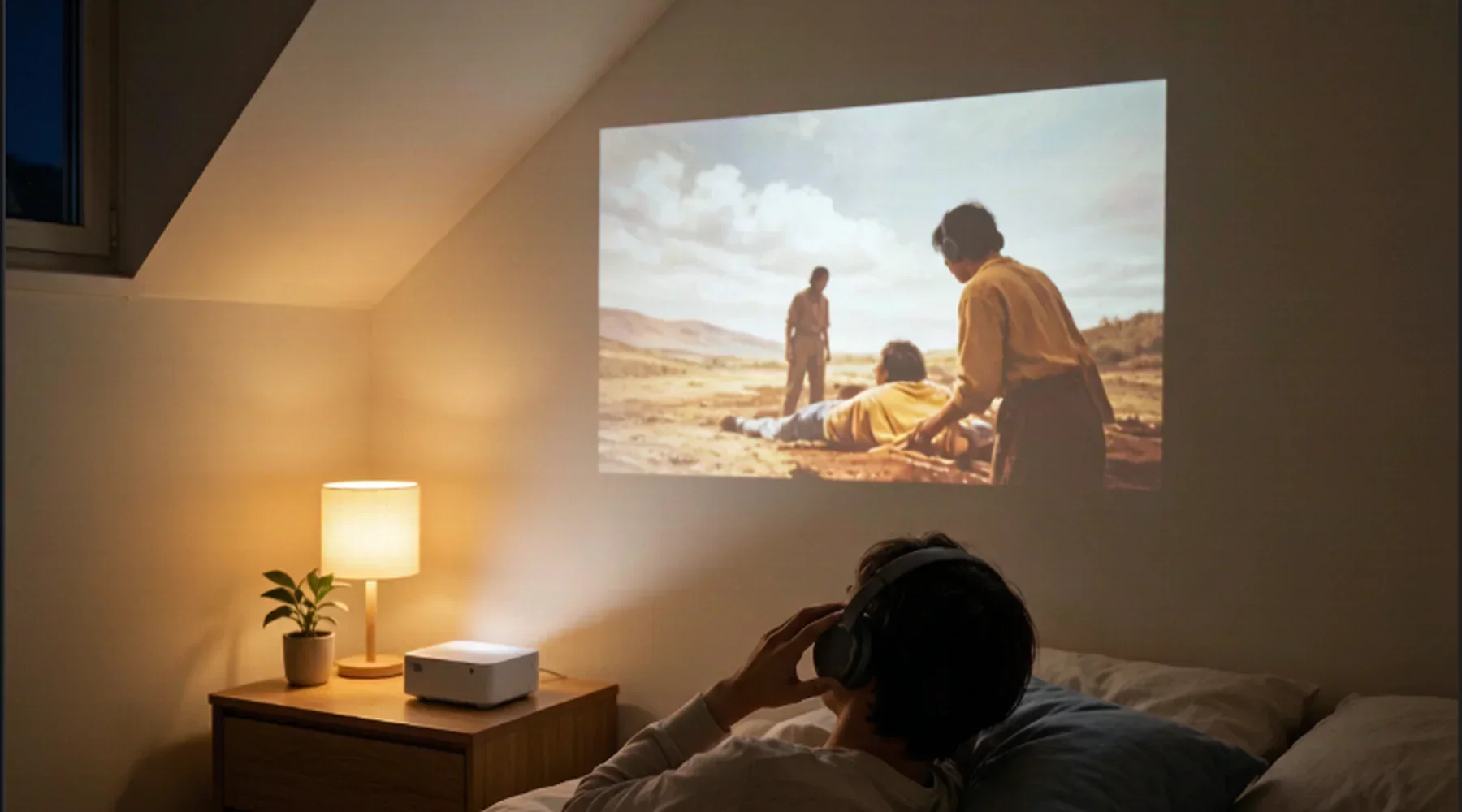
Asmall projector for bedroom-Setups may seem attractive at first glance. The devices are compact, affordable, and can be quickly placed on a nightstand. However, the compromises are significant: due to their tiny housings, they struggle with insufficient cooling, which often makes them disproportionately loud. In addition, brightness and native contrast in these models are usually only sufficient for the most basic requirements.
Ceiling mounting standard projectors: The effort
A classicProjector for bedroom ceilingand to make use of walls is the traditional approach. The projector is mounted to the ceiling above the bed.The disadvantages:Installation is complex. You need to run power and HDMI cables across the ceiling and along the walls, which rarely looks appealing. In addition, the noise source (the fan) is often positioned directly above the viewers' heads with this type of installation.
Ultra-short throw projector (UST): The clean solution for your sideboard
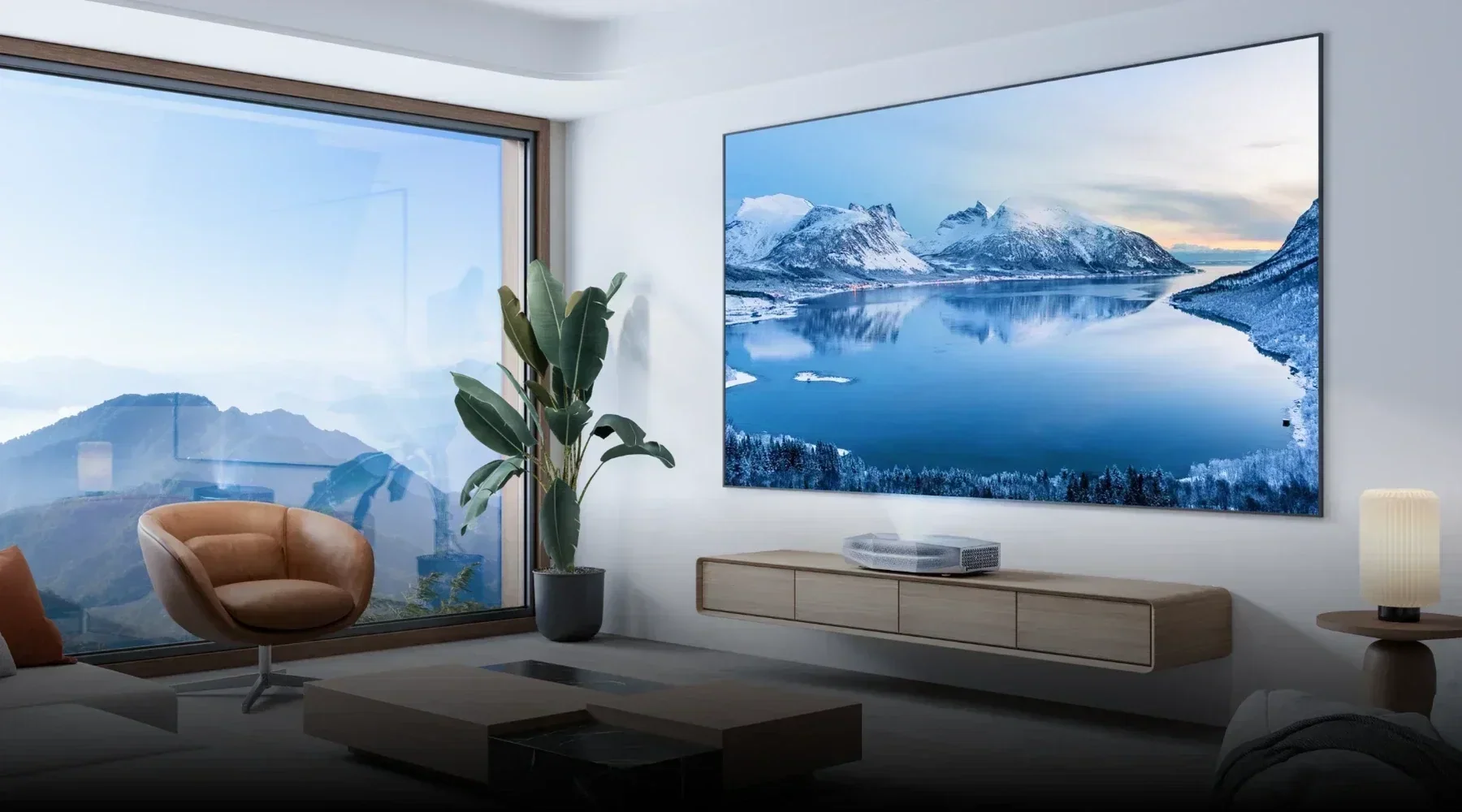
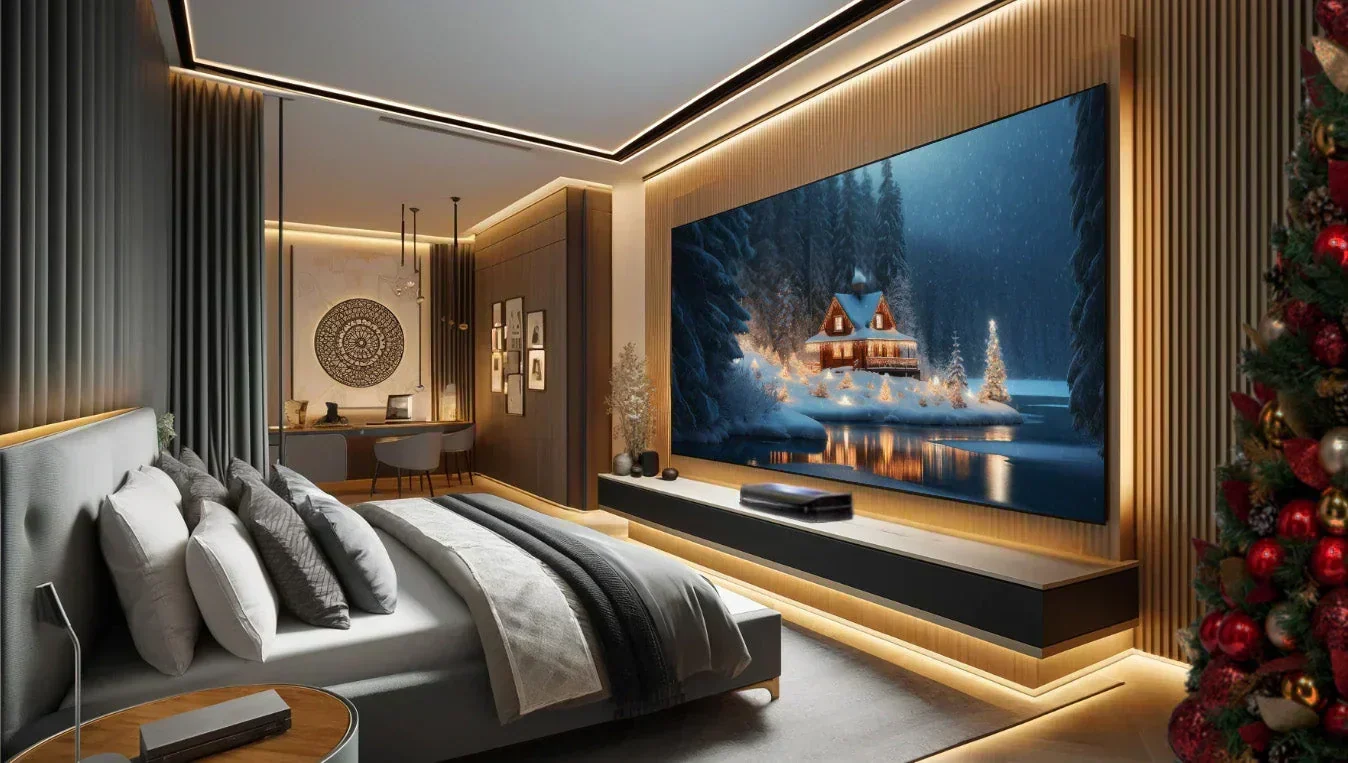
Ultra-short throw projector (Ultra Short Throw)project the image diagonally from below upwards onto the wall. No ceiling mounting or distance across the room is required. The projector is simply placed on an existing cabinet or sideboard directly against the wall. Thanks to their larger housings, they operate more thermally efficiently and are therefore generally much quieter than mini models.
What technology enthusiasts should consider when setting up a bedroom
For users who refuse to compromise on image quality and aesthetics, laser UST technology has established itself as the gold standard. This demonstrates how modern engineering addresses the typical challenges found in bedrooms.
Maximize the throw ratio
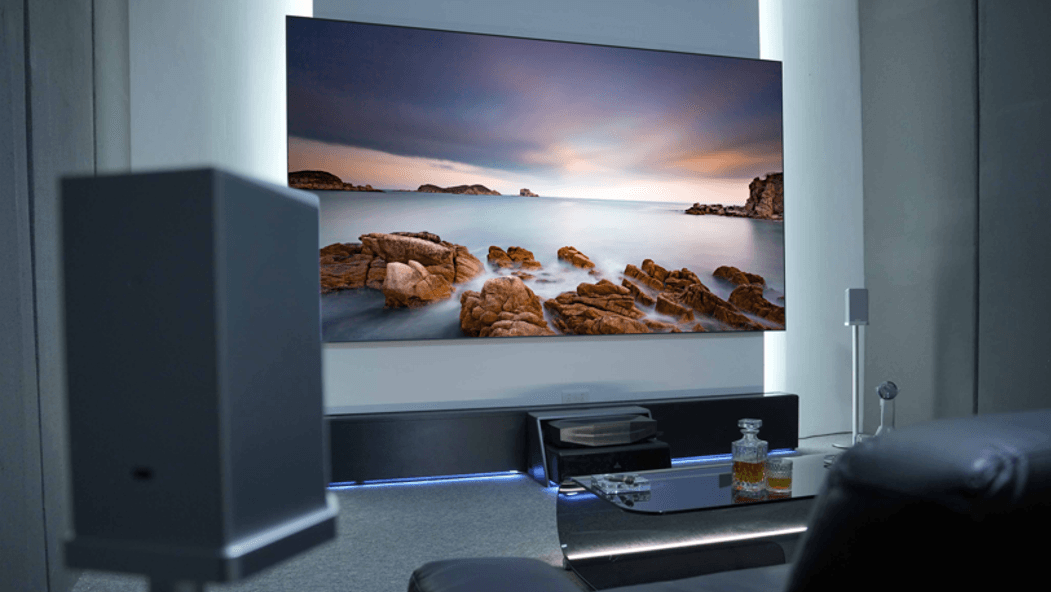
To truly save space, the optics must be extremely wide-angle. Modern premium devices such as theAWOL Vision Aetherion(Pro and Max) offer a throw ratio of 0.2:1, for example. In practice, this means the device can be placed almost flush—just a few centimeters from the wall—on a standard sideboard and still projects a razor-sharp image of 100 to 120 inch.4K image.
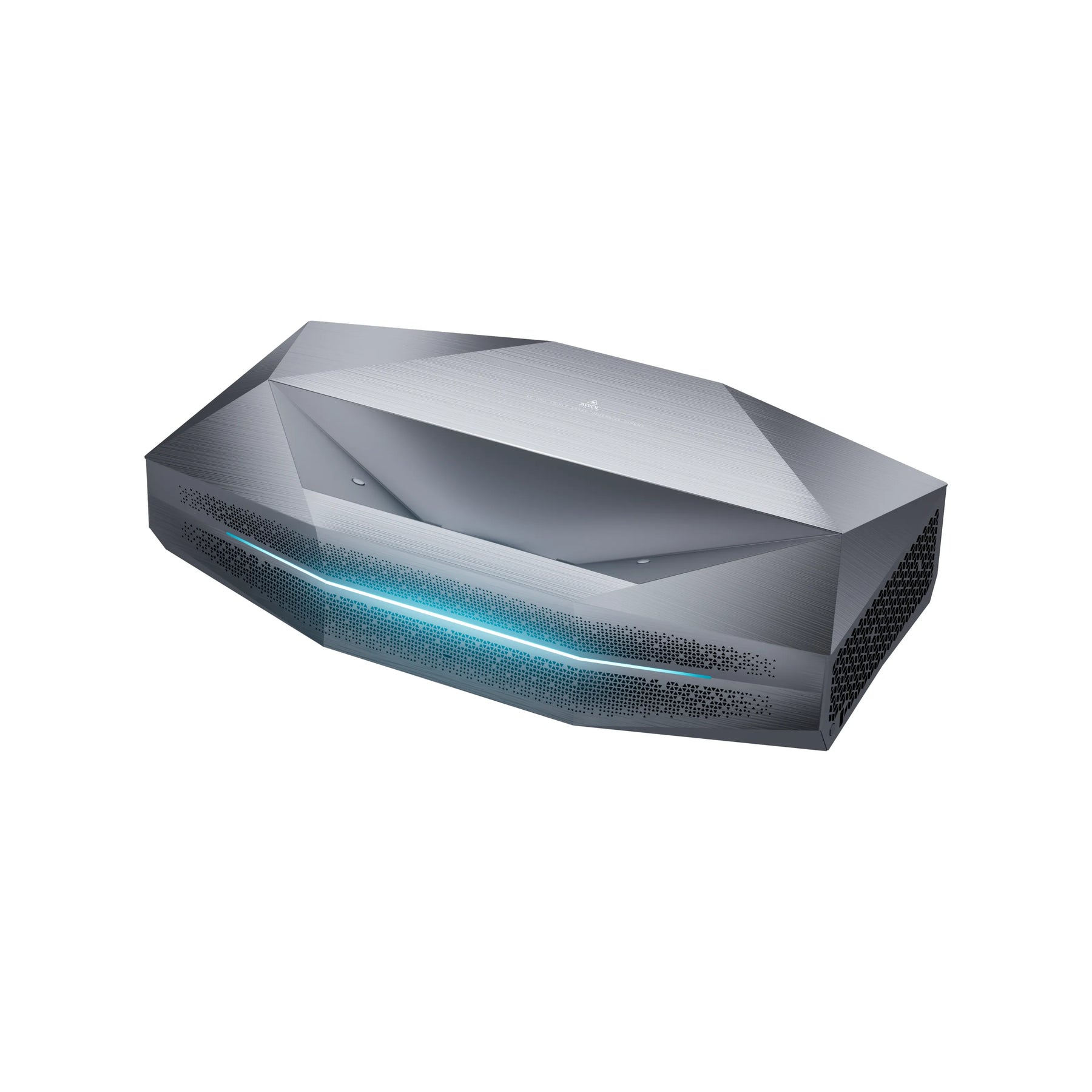
Aetherion Max 4K RGB ultra-short throw projector €3,699.00 €3,999.00 4K up to 200 inch 3300 ISO lumens 6000:1 contrast PixelLock™ Anti-RBE 2D/3D 110% Rec.2020 VRR + 1 msPre-order
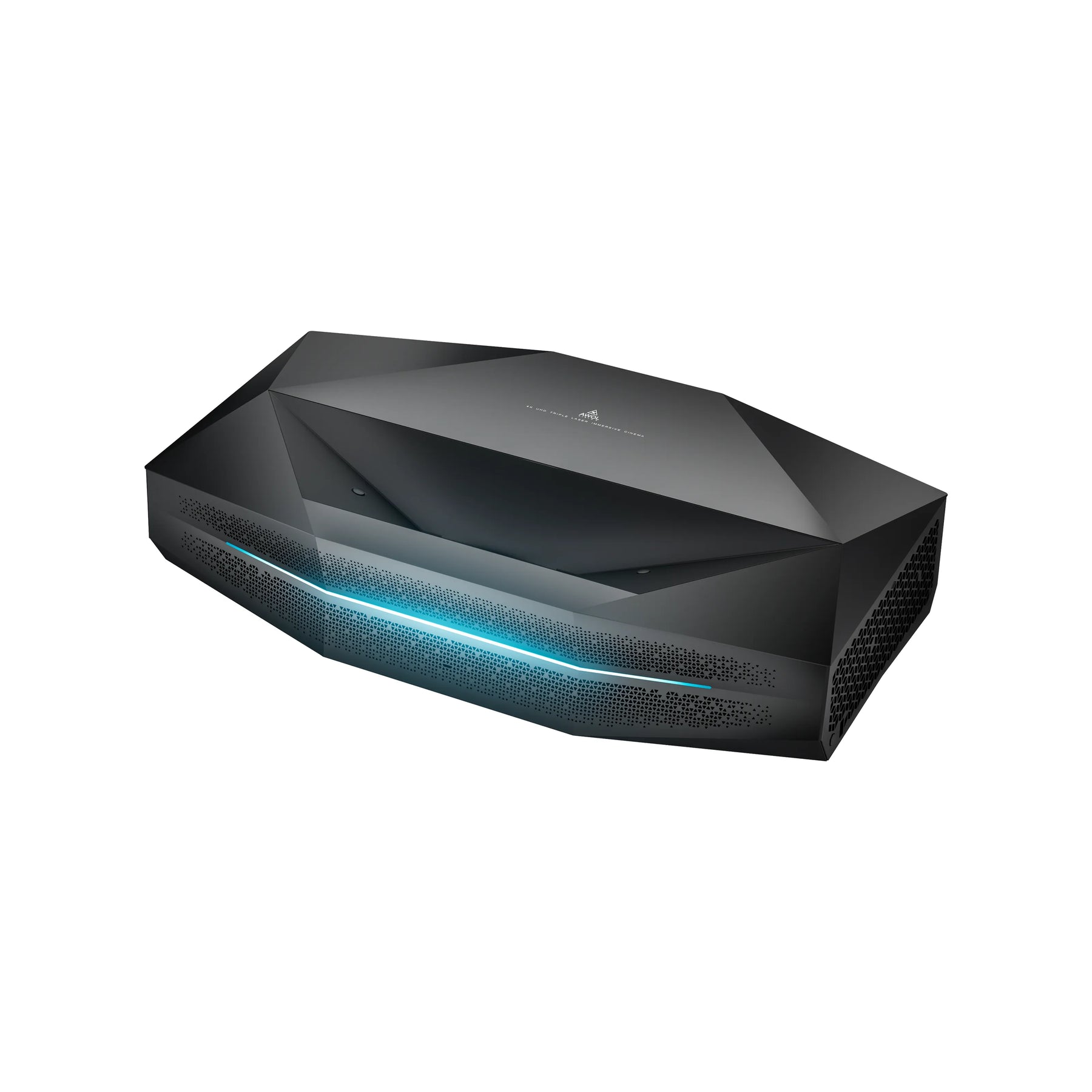
Aetherion Pro 4K RGB ultra-short throw projector €2,799.00 4K up to 200 inch 2600 ISO lumens 6000:1 contrast PixelLock™ Anti-RBE 2D/3D 110% Rec.2020 VRR + 1 msPre-order
All-in-one: Integrated smart systems (OS)
A clean setup eliminates the need for external cables. High-quality projectors now feature integrated operating systems (such as Google TV OS) that natively support Netflix, Prime Video, and more. Combined with good built-in speakers, there is no need for external streaming sticks, AV receivers, or the associated cable clutter.
Durability through laser light sources
Instead of traditional, heat-intensive lamps, high-end devices use laser technology. For a dedicated bedroom cinema, models such as the established newAetherion Seriesadvanced RGB Pure Triple Laser technology. This not only provides excellent color gamut coverage, but also ensures a lifespan of over 25,000 hours. Efficient laser light sources also help minimize fan noise (for example, as low as whisper-quiet ≦ 30dB on the LTV-3500 Pro), ensuring sleeping comfort.
Checklist: How to Plan Your Bedroom Setup
Before making a decision, consider your space based on the following points:
- Distance to wall:Do you have space on a sideboard for a UST projector, or do you need to opt for ceiling mounting?
- Power supply:Where are the power outlets located? (Avoid using long extension cords).
- Projection area:A smooth, white wall is sufficient to start with. However, for maximum contrast, it is worth investing in aspecial ALR screen for projectors, specifically designed to meet the requirements of short-throw projectors.
- Audio:Are the built-in speakers sufficient for you, or would you prefer to use Bluetooth headphones to avoid disturbing your sleeping partner?
Frequently Asked Questions (FAQ)
Which projector is quiet enough for the bedroom?
For the bedroom, you should choose devices with an operating noise level of no more than 30 dB (decibels). Ultra-short throw projectors (UST) and larger home theater projectors are usually quieter than very compact mini projectors due to their more effective cooling systems.
Can I project the projector image directly onto wallpaper?
Yes, this is generally possible. However, textured wallpaper or uneven walls can cast tiny shadows that make the image appear unstable when using high-resolution 4K projectors. For a sharp image, a smooth wall or a dedicated screen is recommended.
What is the difference between a mini projector and a UST projector?
A mini projector is compact, portable, and projects the image directly onto the wall from a certain distance. A UST projector (ultra-short throw) is placed right in front of the wall on a piece of furniture and projects the image steeply upwards. UST devices are usually more expensive but offer a true home theater experience without ceiling mounting or cables running across the room.
Discover More Insights