Projectors for Home: How to Find the Right Model
December 31, 2025
The desire for a true large-screen experience at home continues to grow. But for those who are looking for aProjectors for Homeis faced with a complex array of technical terms: laser or LED? Long-throw or ultra-short throw?
The decision depends not only on your budget, but above all on your spatial conditions. A device that works perfectly in a dark basement may disappoint in a bright living room.
This guide is designed to support your decision-making. We analyze current technologies and objectively explain what you need to consider to make a future-proof investment.
Which projector is right for me? A comparison of the three types
Before comparing technical specifications, you need to choose the design type. The market is broadly divided into three categories, each designed for completely different use cases.
1. The classic home cinema projector (long-throw)
This is the traditional design. The projector is placed or mounted several meters away from the screen.
- Application area:Primarily for dedicated, darkened home theater rooms.
- Disadvantage:Installation is complex (ceiling mount, cable routing across the room). There is also a risk of shadows if people walk through the projection.
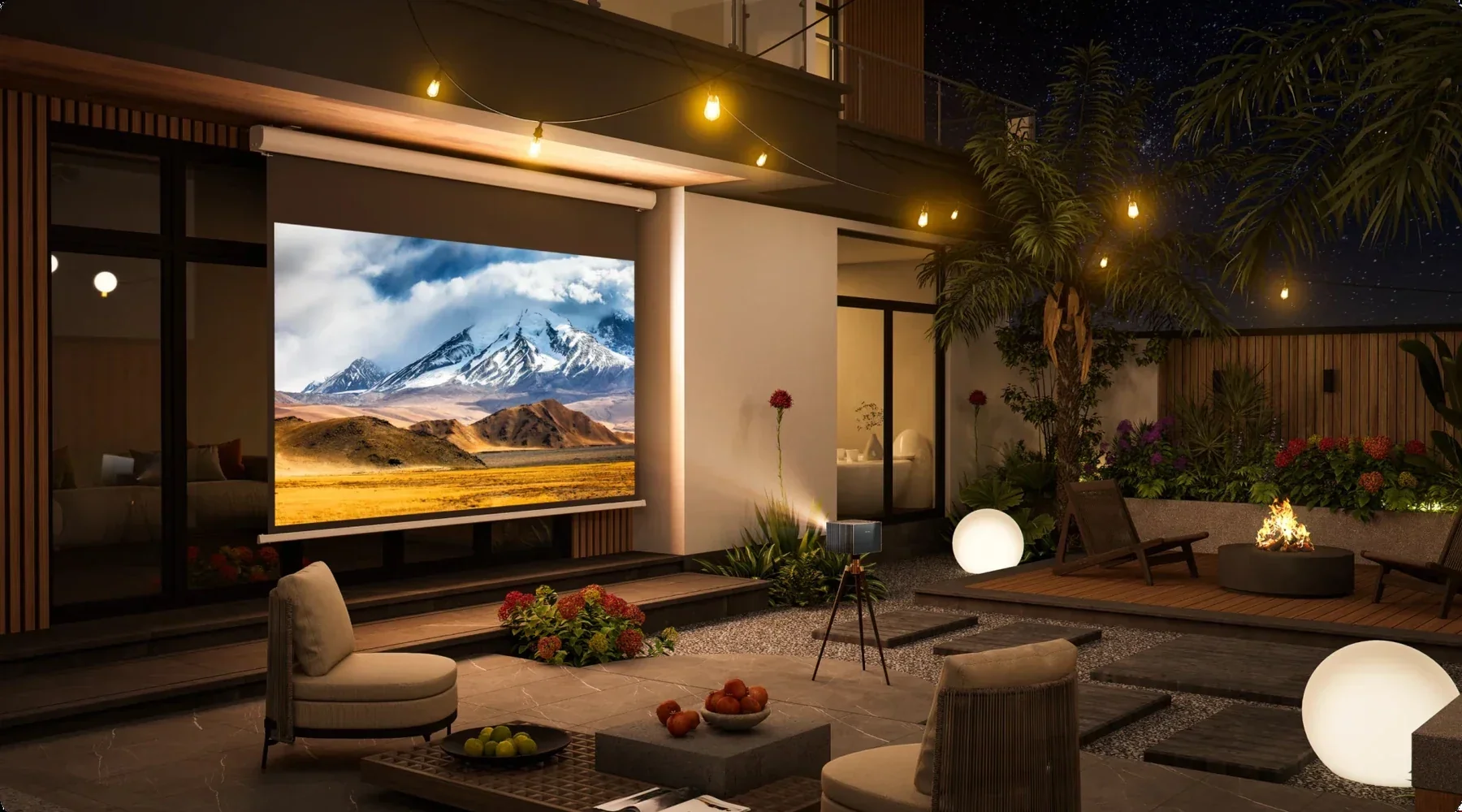
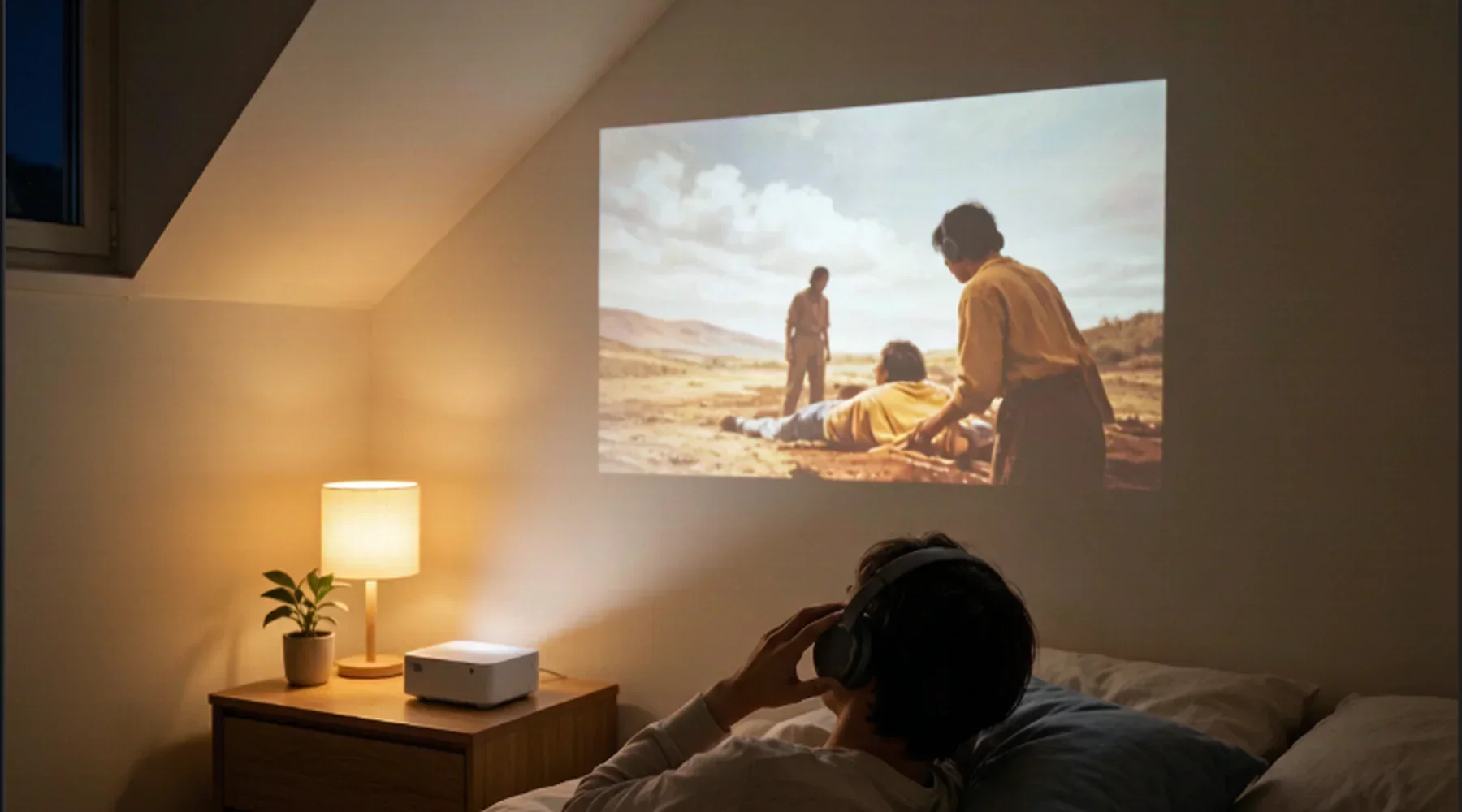
2. The portable mini projector
Compact devices, often battery-powered.
- Application area:Occasional use in the garden or on the go.
- Disadvantage:For a fixedProjectors for Home-Setup usually unsuitable, as brightness and image sharpness cannot match stationary devices.
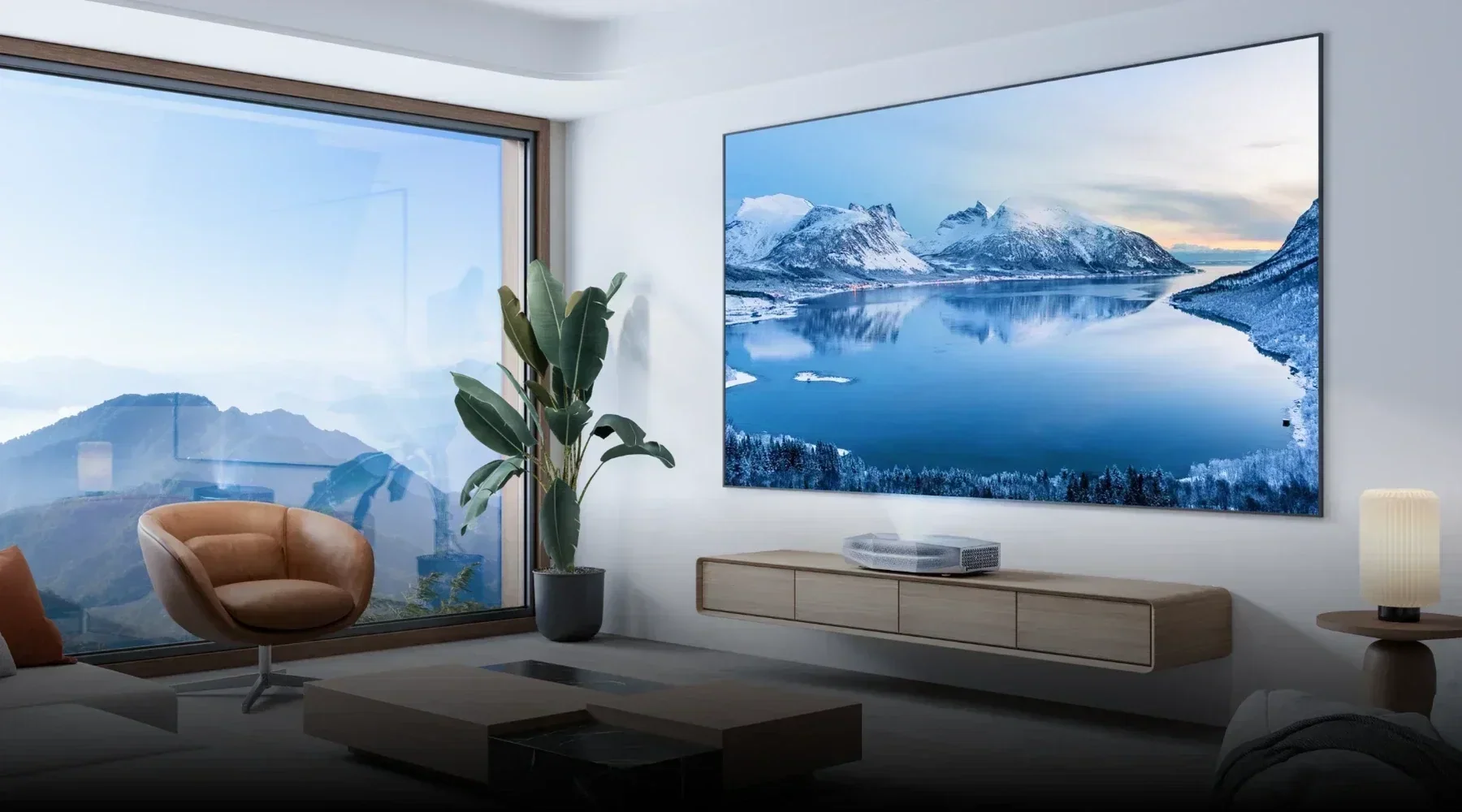
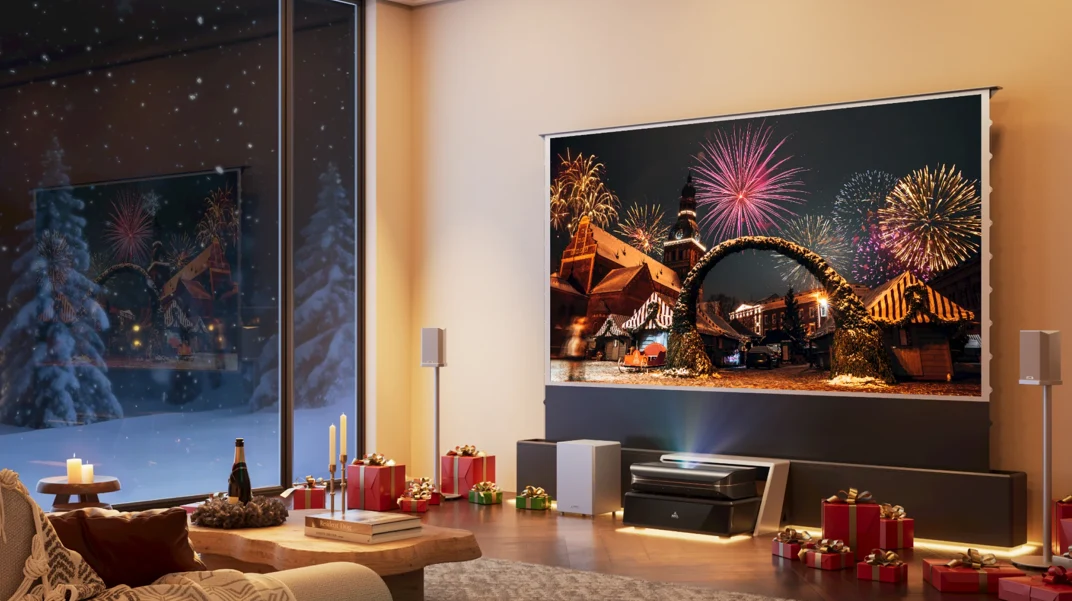
3. The Laser TV (Ultra-Short Throw)
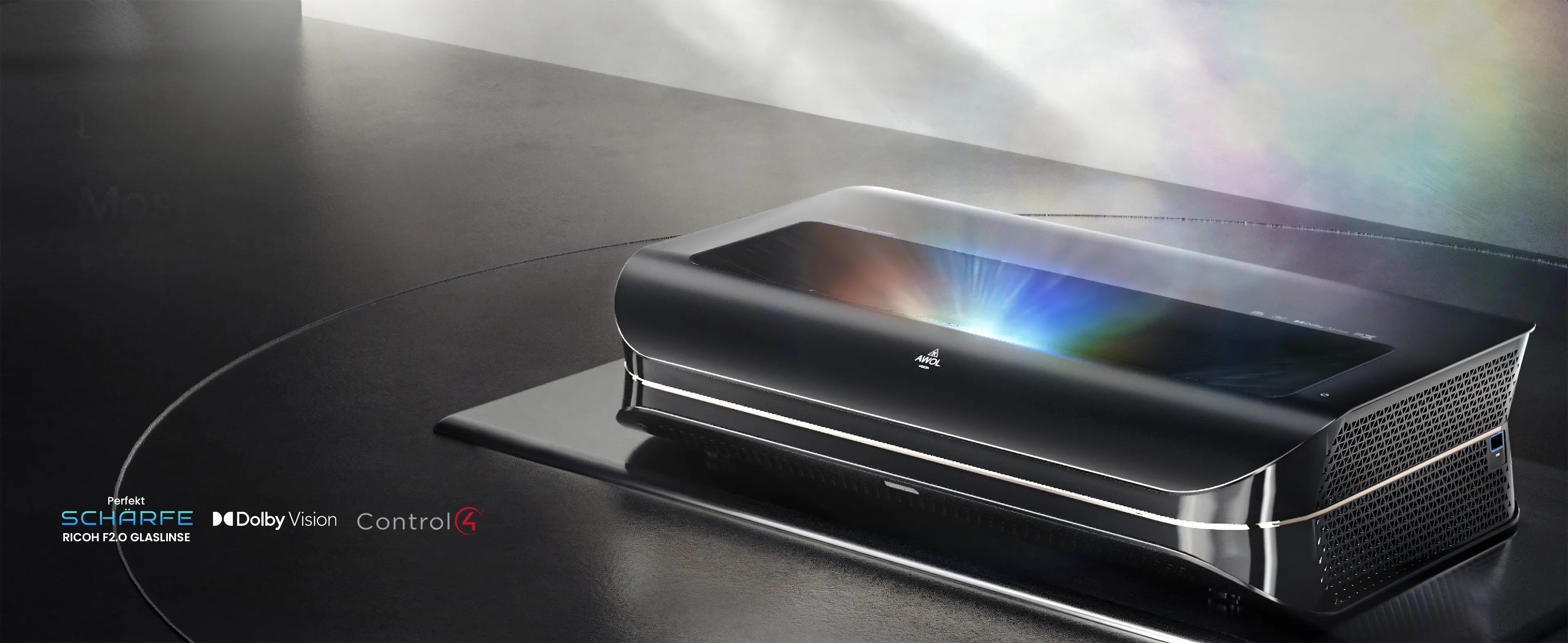
This category has become the standard for the modern living room. Devices from manufacturers such asAWOL Visionare placed directly on the lowboard in front of the wall.
- Application area:Replacement for the TV in the living room.
- Advantage:No structural modifications required. Thanks to laser technology, these devices are extremely bright and durable.
- Deepening:Detailed information about this technology can be found in ourUltra-Short Throw Projector Guide.
Buy a projector: The key criteria for your home theater
If you have aBuy projectorfour technical factors determine image quality. Don't be misled by marketing terms—check these values:
1. The Light Source: Laser Instead of Lamp
While older projectors use mercury vapor lamps that require regular replacement, modern premium devices rely onLaser technology.
- Cost-effectiveness:A laser lasts up to 25,000 hours. With typical use (4 hours per day), this means a lifespan of over 17 years.
- Performance:Lasers offer more stable brightness and cover a wider color gamut (often BT.2020), which is essential for HDR content.
2. Brightness and Daylight Suitability
The questionIs the projector bright enough?is essential for living spaces that cannot be completely darkened. Pay attention to the lumens specification. For aProjectors for homeHigh brightness values (ideally over 3,000 lumens) are necessary in ambient light setups to ensure a high-contrast image.
- Expert knowledge:Why brightness alone is not enough and the role the screen plays can be found inProjector in the living room.
3. Resolution: 4K as the new standard
At screen sizes from 100 to 150 inch, individual pixels become visible at lower resolutions. For a future-proof home theater, you should therefore focus on4K UHD resolutionThis ensures a razor-sharp image even at a short viewing distance.
- Background:Read our analysisIs a 4K projector worth it?for technical details.
4. Contrast & Dynamics (Dolby Vision)
A good image is defined by the difference between light and dark. Technologies such asDolby Visionoptimize the image dynamically scene by scene. This ensures that you can see all details even in dark movie sequences.
- Explanation:What is Dolby Vision and why is it so important?
Set up and install your projector: Easy installation
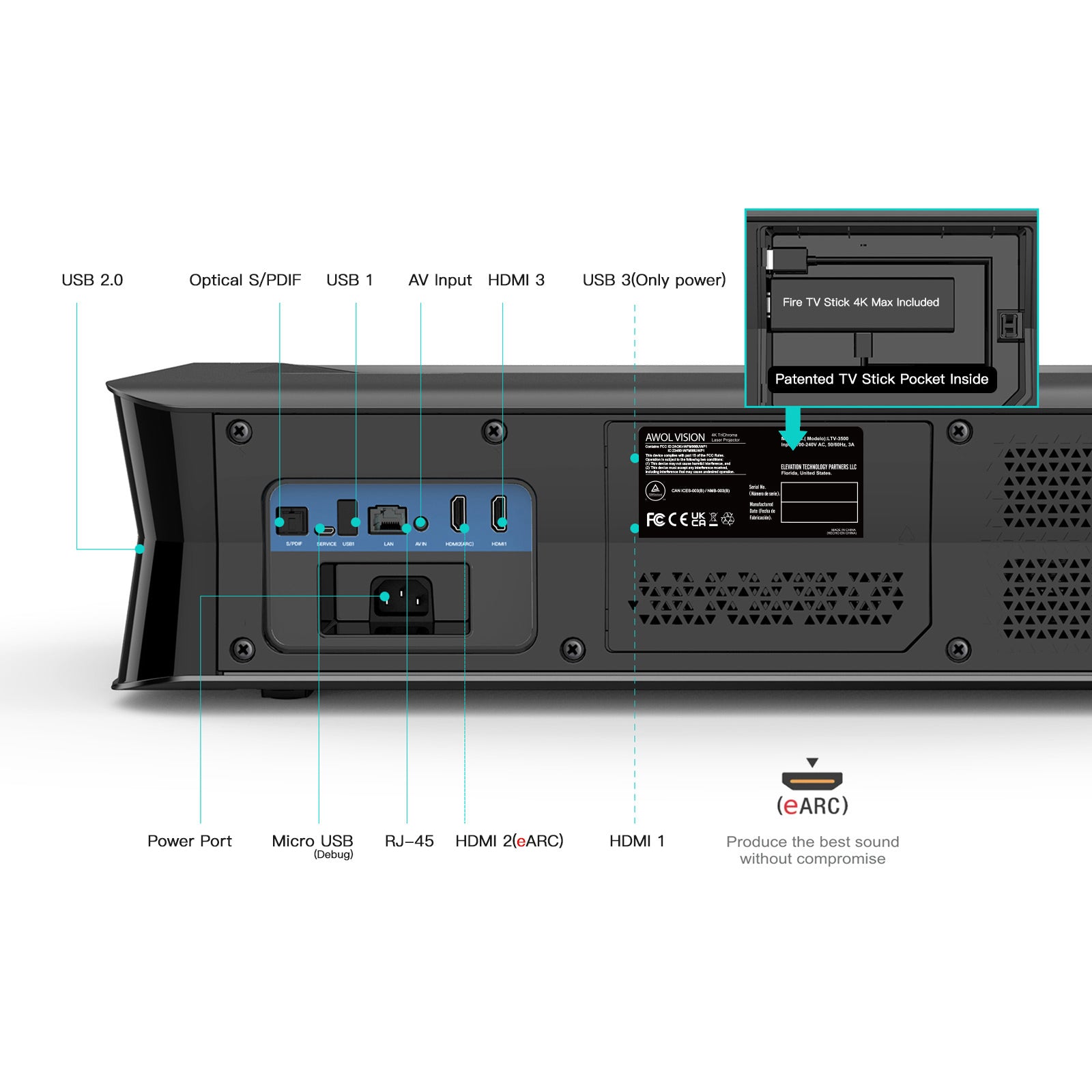
A common obstacle when making a purchase is the concern about a complicatedInstallation. This is where laser TVs differ significantly from traditional projectors.
- Plug & Play:Since ultra-short throw projectors sit on furniture like a TV, there is no need for drilling or installing long cable ducts.
- Smart connectivity:Modern devices often feature integrated streaming sticks (e.g. Fire TV), so you do not need any external players.
- Instructions:If you still wish to use external devices, our guides will assist you:Connect projector to laptoporConnect projector to smartphone.
- Screen size:The screen size is easily adjusted by changing the distance to the wall. Use our calculator to check if your TV stand is deep enough:Calculate screen size.
Important note about audio:The big picture only comes to life with the right sound. Make sure that the projector has aHDMI eARCThis allows you to transmit uncompressed 3D sound (such as Dolby Atmos) directly to your soundbar.
- Learn more:What is HDMI eARC?
Conclusion: A rational choice for the living room
Technology has closed the gap between televisions and projectors. If you are considering aProjectors for Homeyou no longer have to compromise on image quality or ease of use.
- For dedicated, darkened home theaters, the classic projector remains an option.
- For the multifunctional living room, aLaser TV (UST)the technically superior solution, as it combines durability, brightness, and easy installation.
Still unsure whether you should really replace your TV? A direct comparison of the advantages and disadvantages can help:Projector or TV – Which is better?
Discover More Insights