Projector Buying Guide 2026: What You Really Need to Consider
May 12, 2026
Buying a projector is more complex today than ever before. The range extends from mini projectors under €200 to premium laser TVs costing several thousand euros. To help you navigate the overwhelming data sheets, this guide brings clarity to the chaos: discover the five key criteria that truly matter—and why choosing the right light source and projection type is often more important than resolution alone. Further below, we also show which type of projector best suits your specific needs—whether for the living room, bedroom, garden, sports events, or gaming setup.
Key purchase criteria at a glance
| Kriterium | Einsteiger | Heimkino-Standard | Anspruchsvolles Setup (z.B. Laser-TV) |
|---|---|---|---|
| Helligkeit | ab 1.500 ISO-Lumen | 2.500–3.500 ISO-Lumen | 3.000+ ISO-Lumen |
| Auflösung | Full HD (1080p) | 4K UHD | 4K UHD (HDR/Dolby Vision) |
| Lichtquelle | Lampe | LED / Laser | RGB Triple Laser |
| Projektionstyp | Standard (2–4 m) | Kurzdistanz | Ultrakurzdistanz (UST) |
| Leinwand | Mattweiß | ALR-Leinwand | CLR-Leinwand (für UST) |
1. Brightness: How many lumens do you really need?
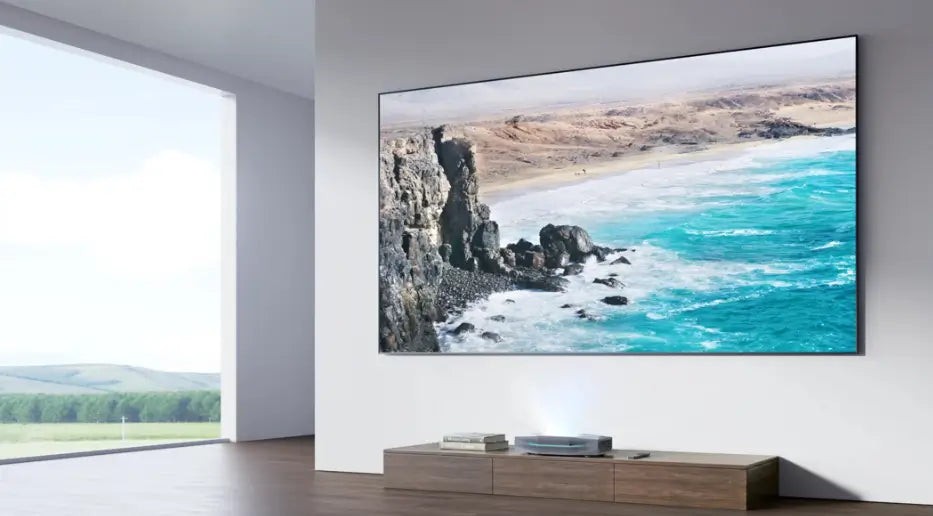
Brightness is the most underestimated factor in any projector buying guide. Manufacturer specifications in "ANSI lumens" or simply "lumens" are inconsistent and often exaggerated. The only reliable standard isISO lumens– pay close attention to this specification when making your purchase.
- Completely darkened room:From 1,500 ISO lumens, sufficient for good image quality.
- Semi-darkened living room (curtains closed):At least 2,000–2,500 ISO lumens.
- Bright living room in daylight:Even 3,000 lumens will hardly help if the wrong screen is chosen. If you want to use your projector in the living room during daylight, you will definitely need a special ALR or CLR screen that filters ambient light.
Practical rule:Always choose a projector with more brightness than you think you need. An overly bright projector can be dimmed using Eco mode; a picture that is too dark cannot be corrected.
2. Resolution: 4K, Full HD, or even higher?
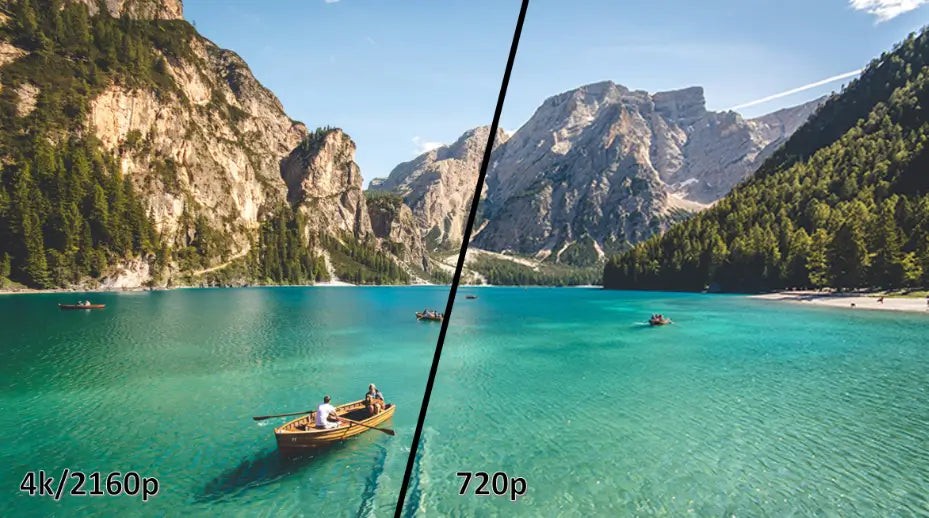
When it comes to projector resolution, not only the actual pixel count matters, but also the chip technology used. Anyone looking to build a future-proof home theater cannot overlook theUHD resolutionWith 3,840 × 2,160 pixels, there is no way around it today. However, with 4K, there are subtle technical differences that you should consider for your budget.
Native 4K vs. 4K UHD (Pixel-Shifting)
- Native 4K:The chip has a physical count of 8.3 million pixels. These chips are extremely expensive to manufacture and often very large, which is why they are typically used only in absolute high-end cinema devices (well beyond €10,000).
- Pixel-shifting (4K UHD):This is the smart and user-friendly solution for the modern home theater. High-quality DLP chips shift the pixels so rapidly that the full 8.3 million pixels are displayed on the screen.
For the user, this means:At a typical viewing distance from the sofa, the human eye cannot distinguish between native 4K and high-quality pixel-shifting. Even with giant screen sizes up to 150 inch, you get flawless, razor-sharp cinema quality—at an unbeatable price-performance ratio.
3. Light source: Laser, LED or traditional lamp?
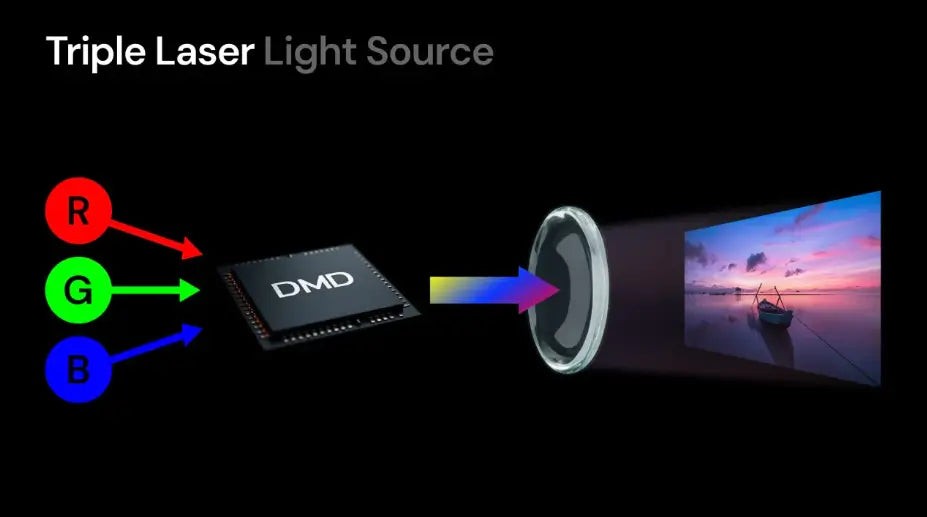
The choice of light source determines maintenance costs, image quality, and lifespan.
- Classic lamp (UHP):Affordable entry price, but the lamp needs to be replaced after 3,000–5,000 hours (additional cost: €100–300). Colors also fade over time. Not recommended for daily use.
- LED:Offers a lifespan of 20,000–30,000 hours and a compact design. However, brightness is often limited and rarely exceeds 2,000 ISO lumens.
- Laser:Up to 30,000 hours of maintenance-free operation with consistent brightness. Especially theRGB triple laser technologyis today the ultimate choice for home theaters. A prime example of this performance is the newAWOL Vision Aetherion Max. It uses three pure lasers (red, green, blue) to project an impressive 3,300 ISO lumens onto the screen and covers an outstanding 110% of the REC 2020 color gamut. This means you get an instantly bright image with no warm-up time and colors as lifelike as those in a premium cinema.
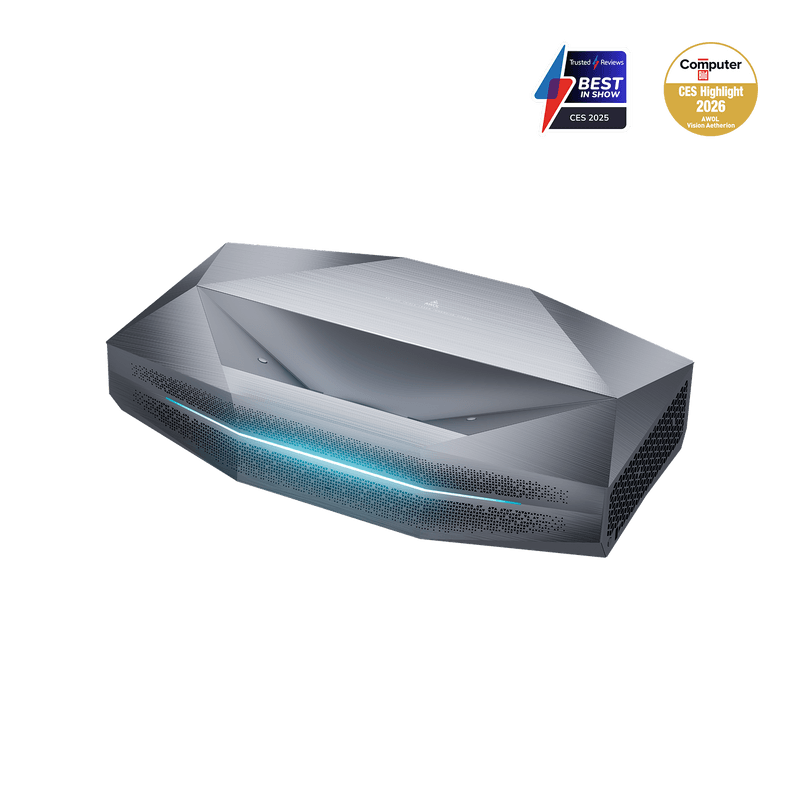
Aetherion Max 4K RGB laser UST projector • 4K clarity up to 200 inch with 3300 ISO lumens • 6000:1 native contrast and 110% Rec.2020 for immersive home cinema • PixelLock™, anti-RBE, and VRR + 1 ms latency for sports, movies, and gamingPre-order
Conclusion:Anyone looking for a projector for regular use should consistently invest in laser technology. The higher initial cost quickly pays off thanks to the elimination of lamp replacements and the outstanding image quality.
4. Projection Type: Standard Projector or Ultra-Short Throw?
The projection type determines where you can place your projector—and how far it needs to be from the wall.
- Normal projector (standard throw):Requires a distance of 2.5–4 meters for a 100 inch screen. It needs to be ceiling-mounted or placed at the back of the room, which often results in cable clutter.
- Ultra-short throw projector (UST):This design is the most elegant solution for anyone who wants to avoid ceiling mounting. UST projectors are placed just a few centimeters from the wall and project gigantic images—without cables running across the room. Find out which projector type (long-throw, mini projector, or laser TV) best suits your home in our basic guide.Projectors for Home Use. For setup details, refer to ourUltra-short throw projector guide.
5. Screen and Smart Features
The right screen
The screen is not an optional accessory – it is the other half of the image.
- Matte white screen: Universal, ideal for darkened rooms.
- ALR screen (Ambient Light Rejecting): Filters ambient light for standard projectors.
- CLR screen (Ceiling Light Rejecting):Specifically designed for ultra-short throw projectors. It filters ceiling and daylight, making it essential for a perfect laser TV experience with the lights on.
Further information on choosing the right screen can be found in ourProjector Screen Buying Guide.
Smart features & connectivity
In addition to image quality and screen, extra features also determine how practical a projector is for everyday use: integrated streaming apps, autofocus, auto keystone correction, and an easy-to-use remote control save time with every use. Which features are ultimately decisive depends largely on where you use the projector—simple operation with a timer function is important in the bedroom, robust mobility matters in the garden, and for gaming, low input lag takes priority over pure cinema quality. In the following section, we show you which type of projector best suits your personal use case.
The right projector for your application scenario
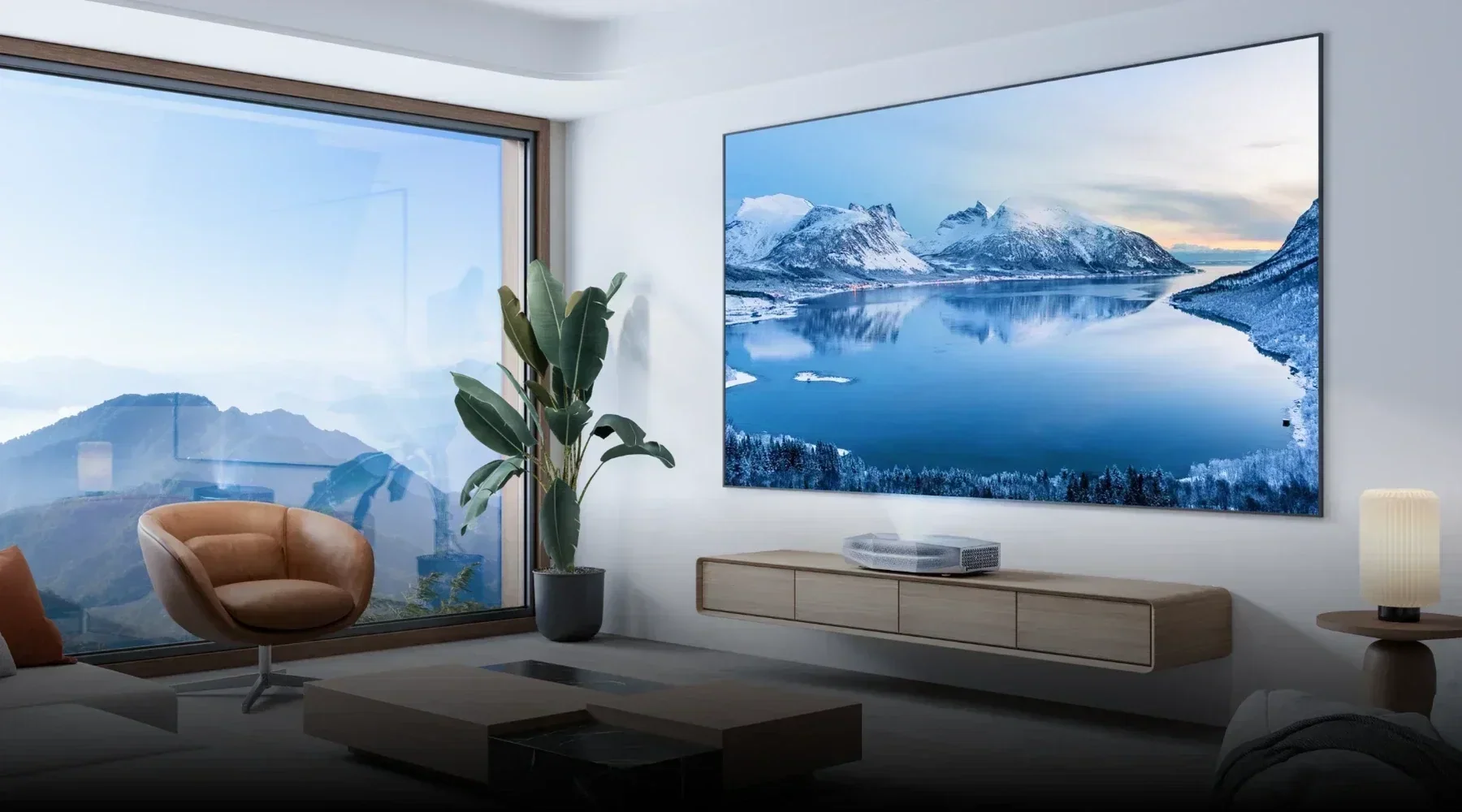
Living room as a TV replacement:If you want to fully replace your TV, you should opt for a laser ultra-short throw model with high ISO lumens and an ALR screen. For details on optimal placement and screen size, refer to our guide.Projectors for the living room. If you want to save yourself the trouble of searching for separate furniture, you will find it in theAetherion Max Bundle including the new Vanish TV cabineta complete living room setup from a single source: The bundle combines the Aetherion Max with its 3,300 ISO lumens RGB triple laser, a motorized ALR screen, and a perfectly matched TV cabinet in one piece of furniture. The projector and screen remain hidden inside the cabinet when not in use and only extend when needed—keeping your living room tidy without having to sacrifice a large screen.
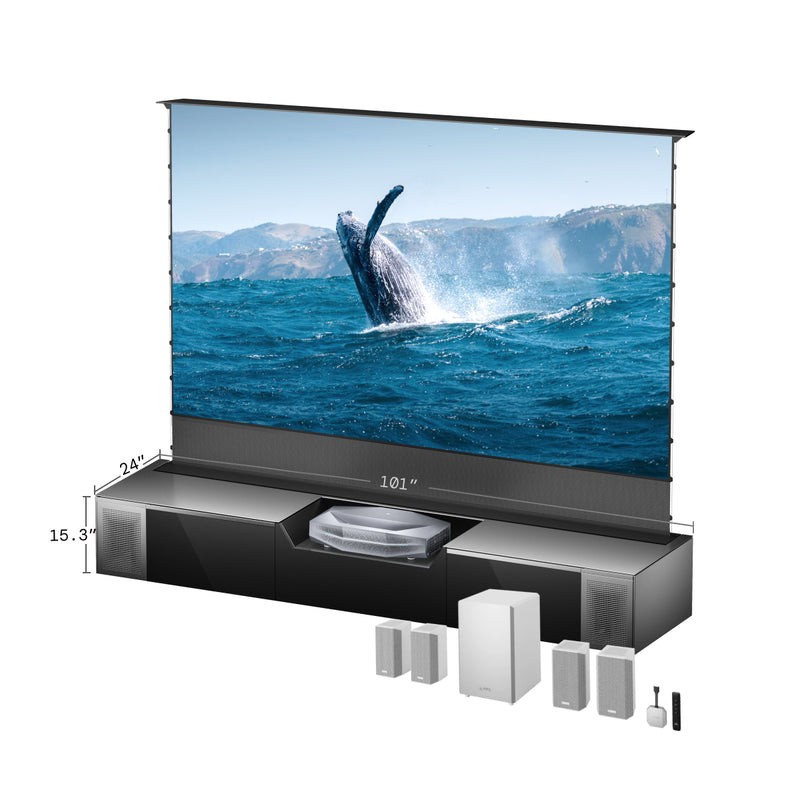
Aetherion Max + Motorized Screen + Vanish TV Cabinet + ThunderBeat • All-in-one premium setup with Aetherion Max, floor screen, TV cabinet, and 4.1.2 ThunderBeat • 3300 ISO lumens, 6000:1 contrast ratio, and 110% Rec.2020 for a bright large-screen experience • Seamless home integration with motorized screen, Vanish cabinet, and wireless surround soundPre-order
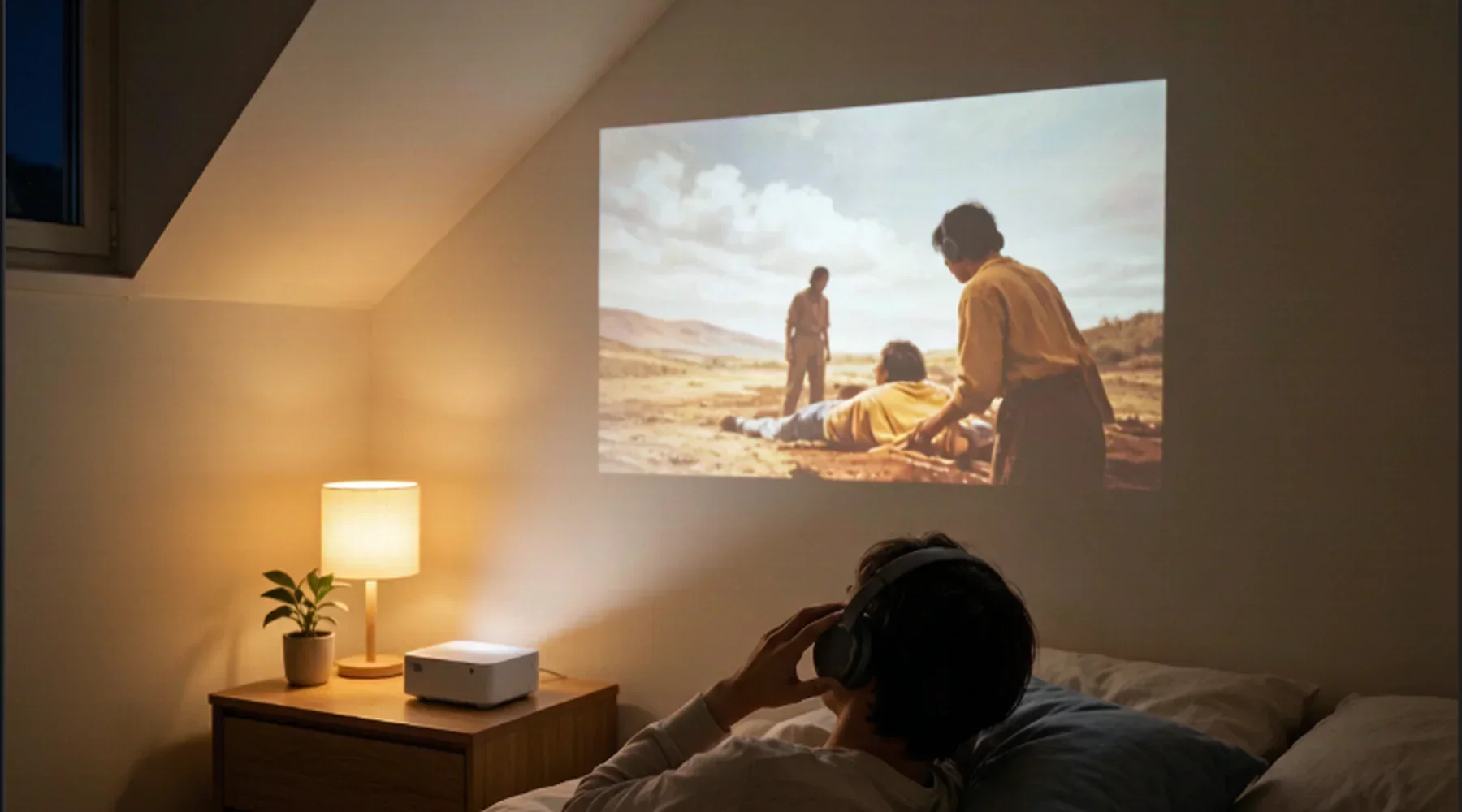
Bedroom & relaxation room:In the bedroom, limited space is the main concern—proper placement is more important than maximum brightness. Since there is usually not enough room for long throw distances, short-throw or ultra-short throw projectors are a better choice here than classic long-throw models. Our detailedProjector buying guide for the bedroomshows the ideal placement and dimming for small rooms.
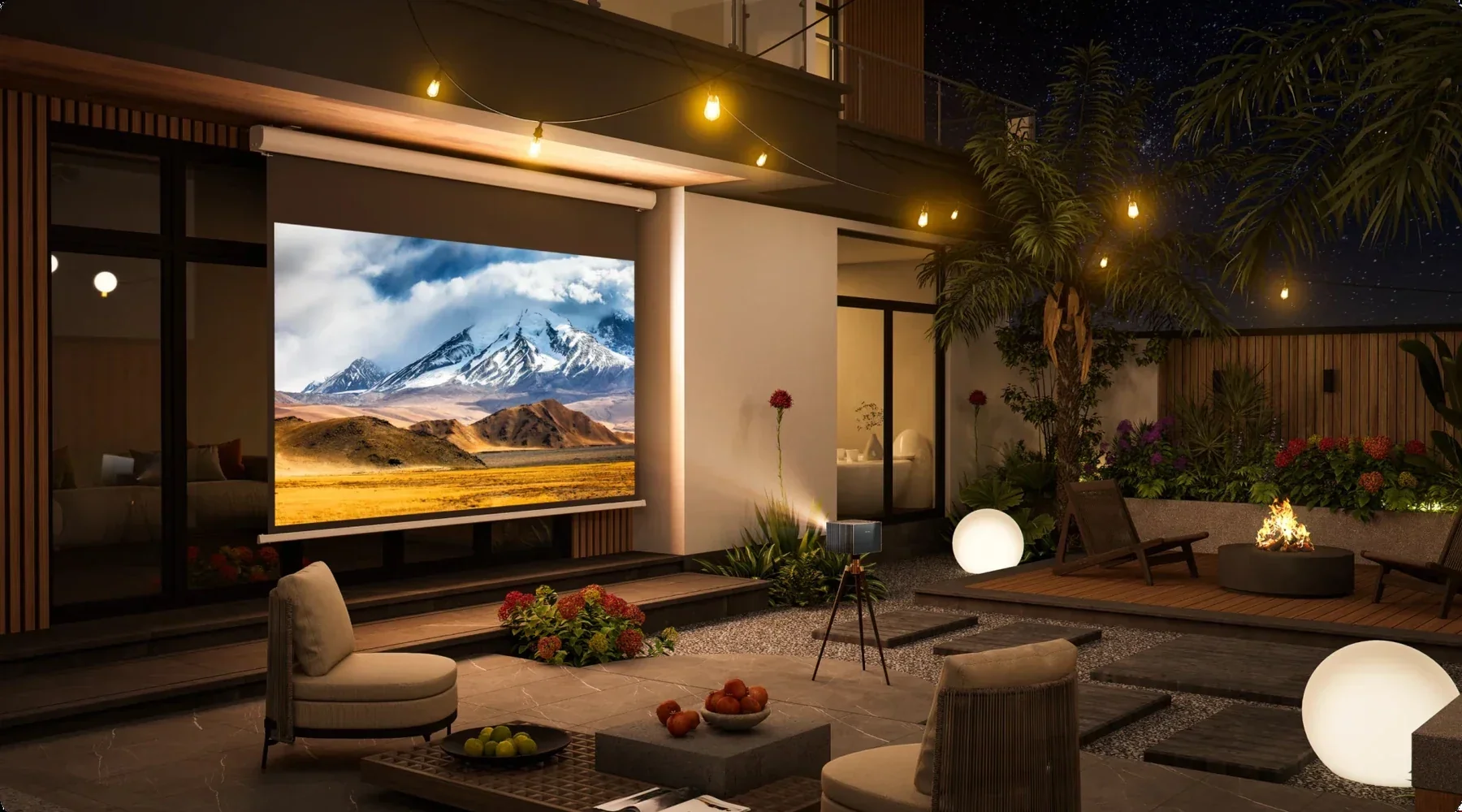
Garden, terrace & sports events:More and more users are specifically looking for a projector for outdoor use, such as for public viewing events or mild summer evenings in the garden. Sufficient brightness for ambient light in the evening and a portable, weather-resistant screen are important here. OurMatch-day system for sports eventsprovides practical setup tips for your outdoor cinema.
Gaming & gaming:Anyone playing on console or PC primarily needs low input lag rather than pure cinema quality. Modern laser ultra-short throw projectors with HDMI 2.1, 4K at 120 Hz, and VRR can now easily keep up with traditional gaming monitors—just on a 100 to 150 inch screen size. This also applies to models like ourAetherion Maxare suitable for such use cases and deliver the necessary image quality for ambitious gaming sessions on the big screen. What matters when making your choice is explained in ourGaming Projector Guide.
Frequently Asked Questions about Projector Buying Guide (FAQ)
What are the most important criteria when choosing a good projector?
The five most important criteria are brightness (ISO lumens), resolution (4K UHD vs. Full HD), light source (laser vs. LED vs. lamp), projection type (standard vs. ultra-short throw), as well as screen and operating noise. Those who align all five factors with their personal use scenario make a future-proof purchasing decision.
How many lumens do I need for my room?
For darkened rooms, 1,500–2,000 ISO lumens are sufficient. For moderately bright living rooms, we recommend 2,500–3,500 ISO lumens. Daylight operation absolutely requires an additional ALR or CLR screen.
What is the difference between 4K and Full HD in projectors?
Full HD offers 2 million pixels, while 4K UHD delivers an impressive 8.3 million pixels. The difference becomes especially noticeable at a screen size of around 100 inch with a standard viewing distance—4K provides razor-sharp details without the screen door effect.
Lamp, LED or laser – which light source is right for you?
For regular use, laser technology—especially RGB triple laser—is clearly recommended: maintenance-free, true-to-color, and with a lifespan of up to 30,000 hours. LED is suitable for compact devices used occasionally, while traditional lamp projectors are now mainly of interest to entry-level users with a limited budget due to the high cost of lamp replacements.
How far does a projector need to be from the wall?
This depends on the type of projector: Standard long-throw projectors require a distance of about 2.5–4 meters for a 100-inch screen and are usually ceiling-mounted. Ultra-short throw projectors (UST), on the other hand, are placed just a few centimeters from the wall or screen, making them ideal for living spaces without ceiling installation.
Conclusion: How to Find the Right Projector
The best buying advice is personal: Analyze your space (size, lighting, setup) and your intended use before making a decision. For most modern living rooms, a laser ultra-short throw projector with RGB triple laser technology, 4K UHD resolution, and over 2,500 ISO lumens currently offers the most compelling overall package. It combines a gigantic, TV-like image with perfect living room compatibility and far surpasses the experience of traditional large-screen TVs.
Discover More Insights