What is a good contrast ratio for projectors?
April 15, 2026
It can be extremely frustrating when you buy aHome theater in the living roomwants to set up and is completely overwhelmed by the technical specifications. One manufacturer advertises a contrast ratio of 1,000:1, while another promises an incredible 1,000,000:1. But what do these numbers actually mean in practice?
If you're wondering what constitutes a good contrast ratio for projectors and how to avoid falling for misleading marketing tricks, you're in the right place. In this article, we decode the technology behind the numbers and show you what truly matters for achieving a crisp, vivid image.
What does contrast ratio actually mean?
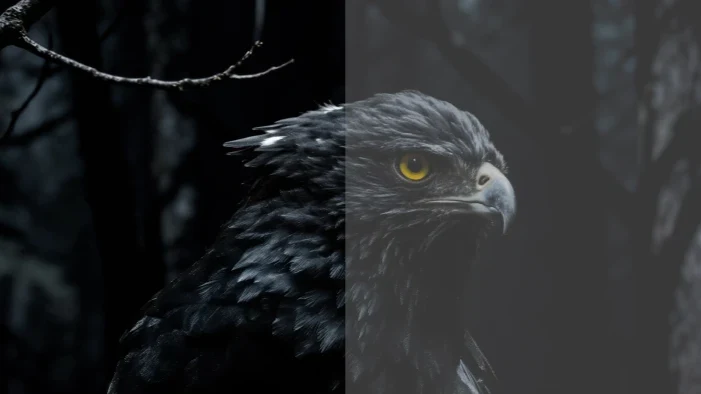
The contrast ratio describes the difference in brightness between the brightest white and the darkest black that a projector can display simultaneously.
A contrast ratio of 1,000:1 simply means that the brightest white on the screen is 1,000 times brighter than the deepest black. If you want to understand the basics,how a projector works, contrast is, alongside pure brightness, the most important factor for image quality.
Weak contrast causes dark movie scenes to appear not black, but rather as a washed-out, milky gray. Strong contrast, on the other hand, delivers impressive image depth, vibrant colors, and a true 3D effect—even with 2D content.
Which is better: contrast ratio 3000:1 or 1000:1?
This is one of the most frequently asked questions when choosing a projector. The clear answer is:3,000:1 is visibly better than 1,000:1.
Standard DLP projectors (Digital Light Processing) typically offer a contrast ratio between 1,000:1 and 2,000:1. Upgrading from 1,000:1 to 3,000:1 delivers an immediately noticeable difference. Blacks appear much deeper, and shadows in dark movie scenes reveal significantly more visible detail. For a solid, darkened home theater, 3,000:1 is an excellent benchmark for conventional projectors.
Is a contrast ratio of 100,000:1 good?
If 3,000:1 is good, then 100,000:1 must be fantastic, right? Not necessarily. This is where marketing tricks start to come into play, blurring the line betweenLumens vs. ANSI lumensis very similar. To understand these absurdly high numbers, we need to distinguish between two terms:
1. Native contrast
This is the most important metric. The native contrast describes the pure performance of the hardware components (the chip and the lens) in a single movie frame. If this reads 3,000:1, it is a very good and honest value.
2. Dynamic Contrast
Figures like 100,000:1 or 1,000,000:1 are almost alwaysdynamicContrast values. The projector uses software or a mechanical iris to drastically reduce light in dark scenes and fully increase it in bright scenes. Manufacturers then measure the brightest white in a bright scene and compare it to the darkest black in a completely different, dark scene.
The result? An impressive number on paper, but it says nothing about how well the projector handles bright and dark elements.simultaneouslycan display in a single image.
The new standard: True black with advanced laser technology
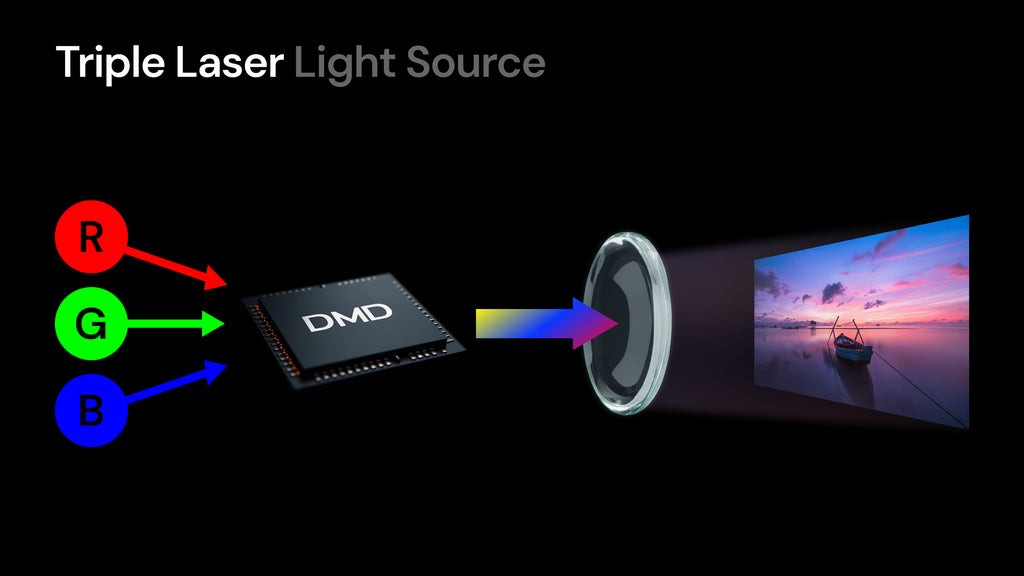
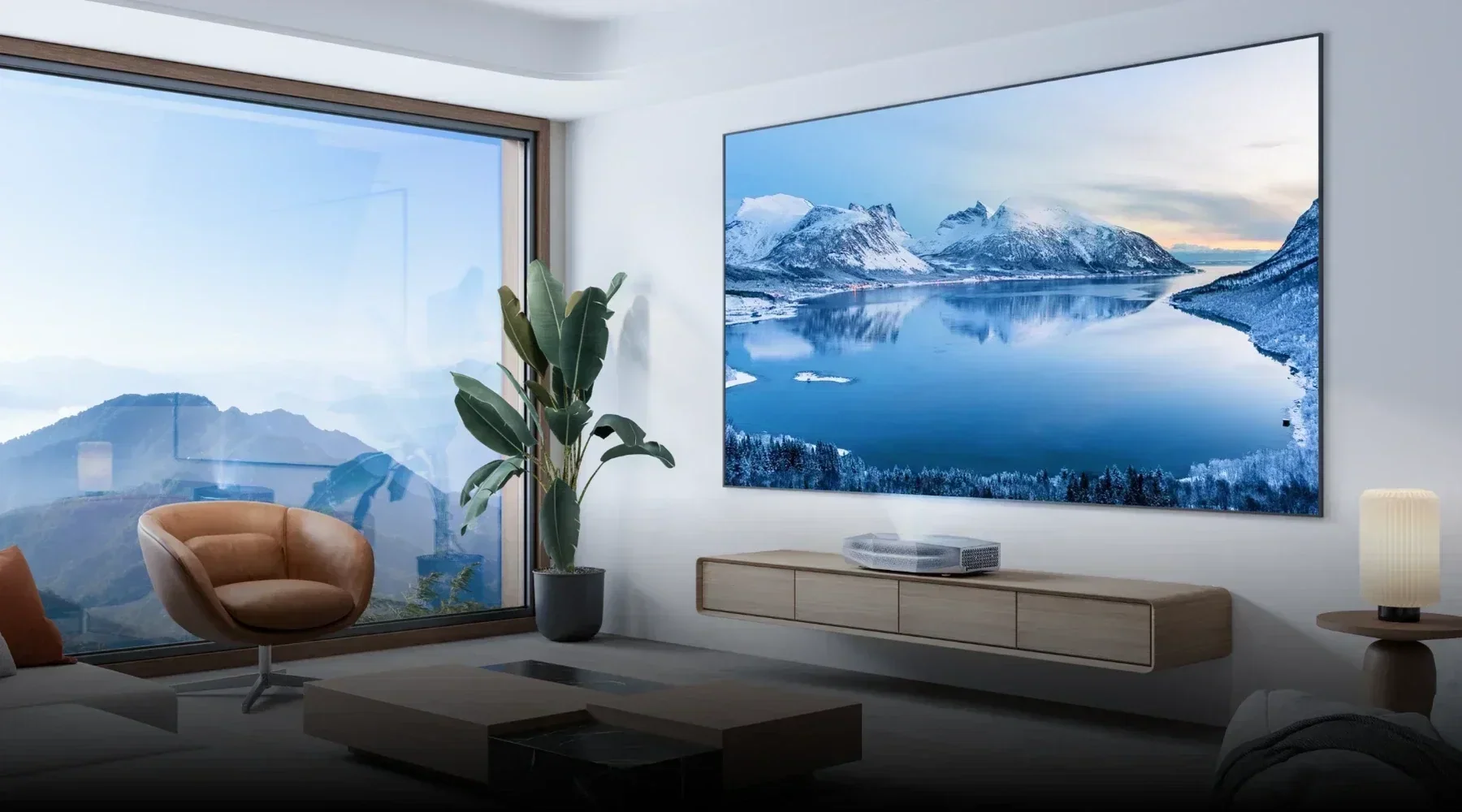
However, the industry has evolved. Today, if you want to fully replace your TV with aUltra-short throw projectorIf you want to replace your (UST), you no longer have to settle for mediocre black levels.
The spearhead of modern projection technology, such as theAWOL Vision Aetherion-Series (Aetherion ProandAetherion Max), uses RGB pure triple laser technology in combination with advanced optical systems.
Instead of relying on misleading software tricks, the Aetherion delivers an impressivenative contrast of 6,000:1 (with dynamic iris). This represents a significant improvement over the industry standard. In addition, advanced algorithms enable it to achieve aEBL (Enhanced Black Level) contrast of 60,000:1. The result is cinema-quality black levels, which, in combination withwith dynamic tone mappingand creates unparalleled image depth with true Dolby Vision.
The role of the right screen
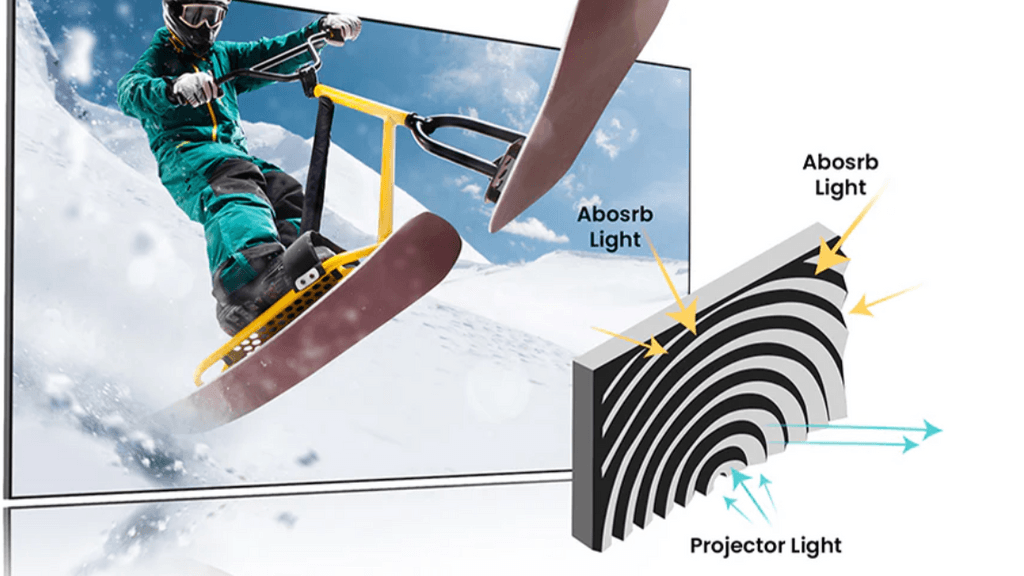
Even the projector with the world’s best contrast ratio loses its impact if you project it onto a bare white textured wallpaper. A white wall reflects ambient light in the room back onto the image, immediately destroying the black levels.
To maximize the contrast potential of your projector—especially in bright living rooms—theright screenindispensable. An ALR screen (Ambient Light Rejecting) blocks disruptive ceiling light and reflects only the projector’s light directly to your sofa. This preserves deep black levels and makes the image appear as high-contrast as on an OLED TV.
Discover our selection ofhigh-quality ALR screens, perfectly matched for laser TVs.
Conclusion: What to consider when buying
Finding the perfect projector doesn't have to be complicated when you know which numbers truly matter:
- Caution with million-level figures:Ignore astronomical dynamic contrast ratios on budget projectors. Always look for thenativeContrast.
- The standard (1,000:1 to 3,000:1):1,000:1 is the absolute minimum for a usable image. A native contrast ratio of 3,000:1 already delivers impressive, deep blacks for standard home theaters.
- The premium class (6,000:1 native):If you are looking for uncompromising image quality, high-end models such as theAWOL Vision Aetherionwith a native contrast of 6,000:1 (including iris) and 60,000:1 EBL contrast, setting entirely new standards for the living room.
- No contrast without a screen:Don't forget to complete your setup with an ALR screen to ensure optimal contrast performance even in daylight.
Are you ready for the ultimate home theater upgrade? Discover our4K laser TV modelsand experience contrast and color depth on an entirely new level.
Frequently Asked Questions (FAQ) about Projector Contrast
What is the difference between FOFO contrast and ANSI contrast?
When you delve into technical datasheets, you will often encounter these two terms. TheFOFO contrast(Full On/Full Off) measures a completely white image followed by a completely black image in succession. This results in very high numbers, but does not reflect real-world conditions. TheANSI contrast(Chessboard contrast) measures black and whitesimultaneouslyin a checkerboard pattern. The ANSI contrast is therefore a much more accurate measure of image depth in a real movie scene. An ANSI contrast of 300:1 to 500:1 is already considered outstanding.
Is a contrast ratio of 10,000:1 sufficient for daylight?
On paper, 10,000:1 (dynamic) sounds impressive. WithDaylight or in a non-darkened living roomHowever, this value quickly loses its significance when you use a standard white screen. Ambient light physically brightens the black areas on the screen. For daylight setups, an extremely bright laser projector combined with an ALR screen is much more important than a theoretical contrast ratio of 10,000:1.
Does a gray screen improve projector contrast?
Yes, in non-optimized rooms (with white walls or ambient light), a gray screen or a special ALR contrast screen can work wonders. Since gray is naturally darker than white, the black level is significantly lowered, which greatly increases the perceived in-image contrast. The brilliant colors of a triple-laser system like the AWOL Vision Aetherion still shine through powerfully.
Is a contrast ratio of 1000:1 sufficient for HDR content?
For true HDR (High Dynamic Range) orDolby VisionA contrast ratio of 1,000:1 is generally too low, as HDR relies on extreme brightness differences and deep blacks. An image with a 1,000:1 contrast ratio often appears somewhat flat with HDR content. To fully benefit from the dynamic metadata of HDR10 or Dolby Vision, a native contrast ratio of at least 3,000:1, up to the 6,000:1 found in premium models, is recommended.
Discover More Insights