Projector or TV? The ultimate guide to the best picture quality for your home
August 19, 2025
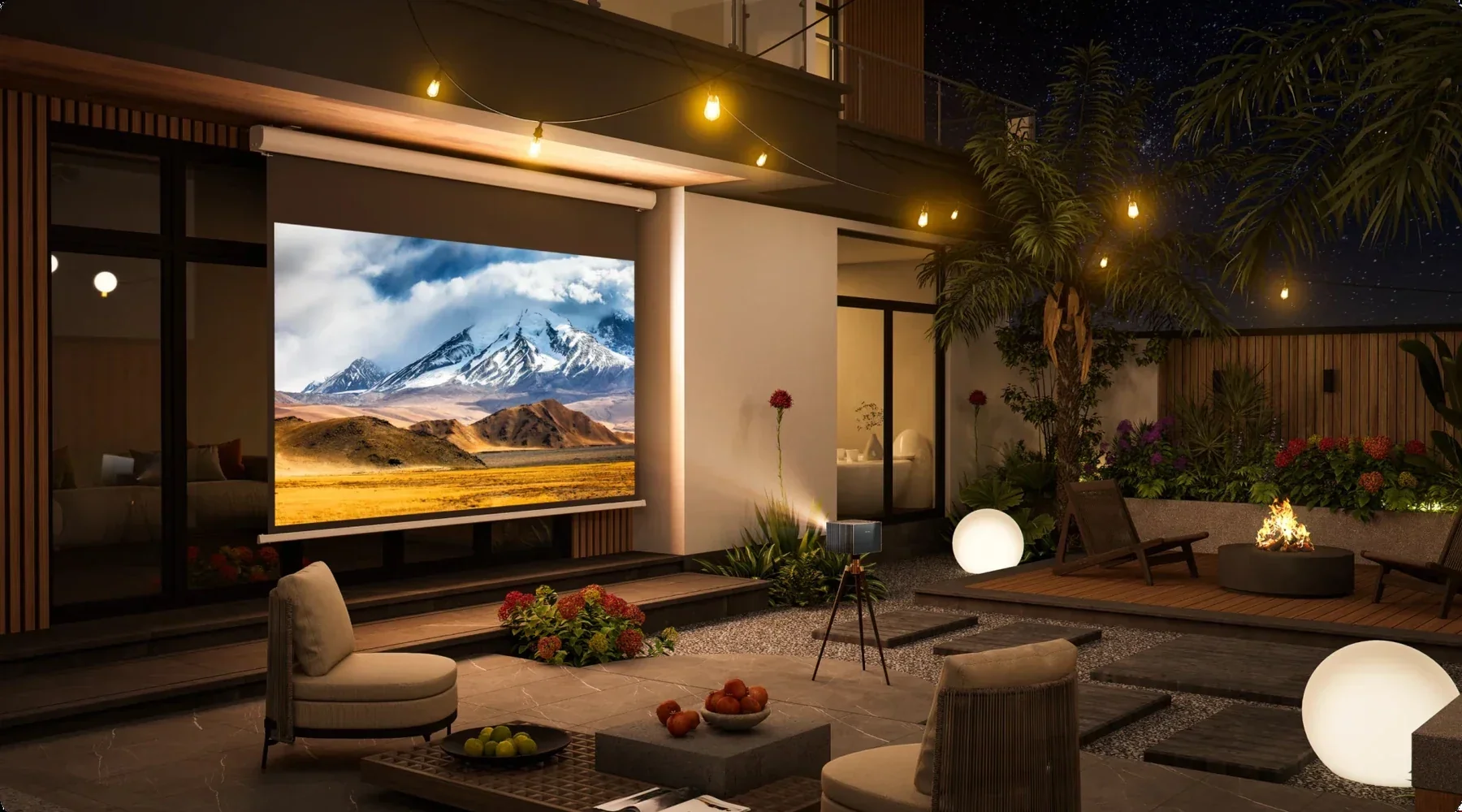
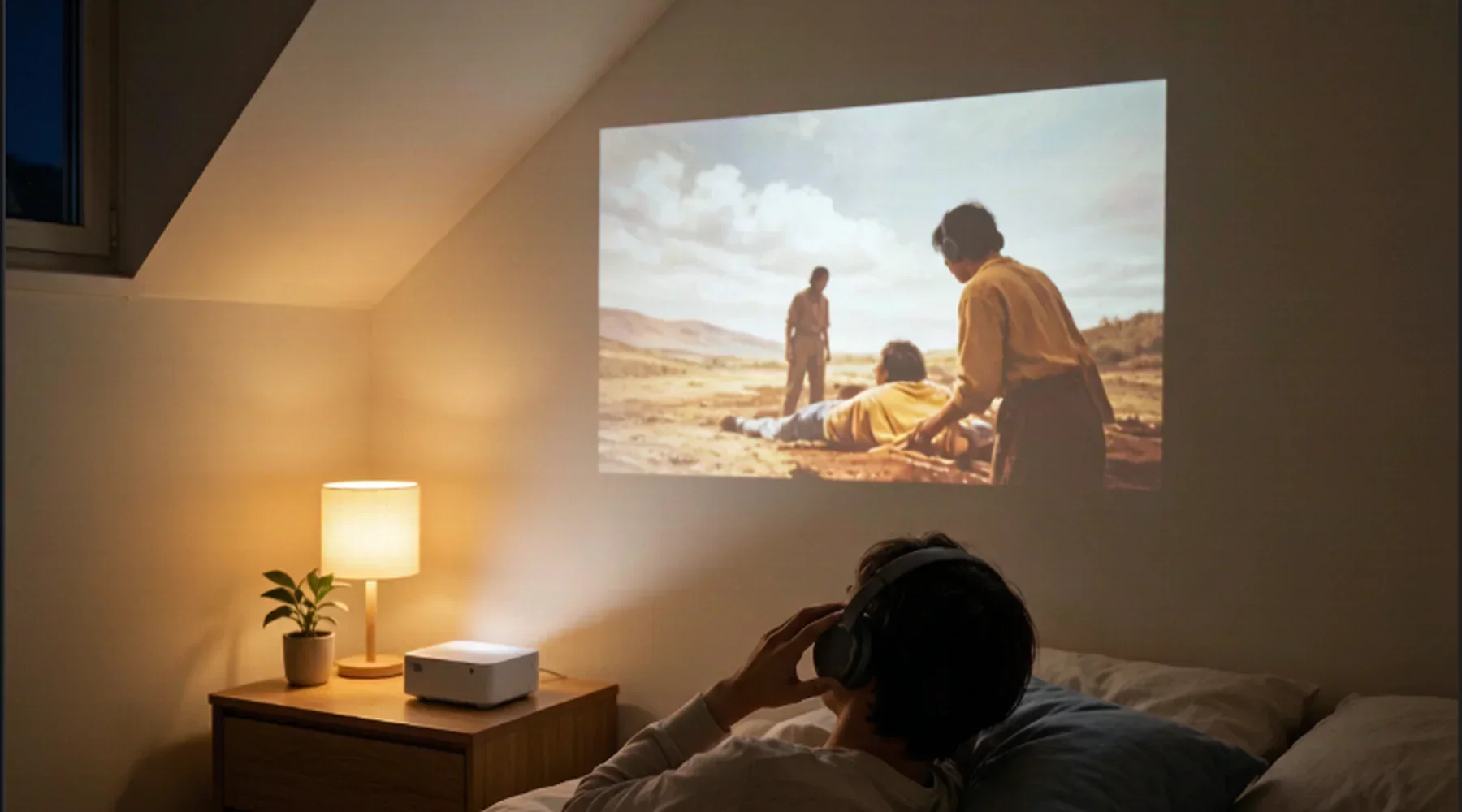
The choice between a projector and a TV is one of the most fundamental decisions in modern home entertainment. But it’s about much more than just selecting a screen size. It’s a decision between two philosophies: On one side, the TV—a master of versatility, delivering brilliant, bright picture quality and effortless convenience in almost any environment. On the other side, the projector—a specialist for special occasions, creating an exceptionally large, immersive image and bringing the authentic feeling of a cinema visit into your own home.
New technologies such asLaser TVshave blurred the boundaries between these two worlds, making the decision more complex but also more exciting. The aim of this article is to provide you with clear and honest guidance. We analyze all the key factors—from image quality and cost to viewing comfort—so you can find the perfect solution for your needs, your space, and your budget.
The direct comparison: All key criteria put to the test
To make the right choice, we need to objectively assess the strengths and weaknesses of both technologies. Each criterion plays a crucial role in your future viewing experience.
Criterion 1: Screen Size & Immersion
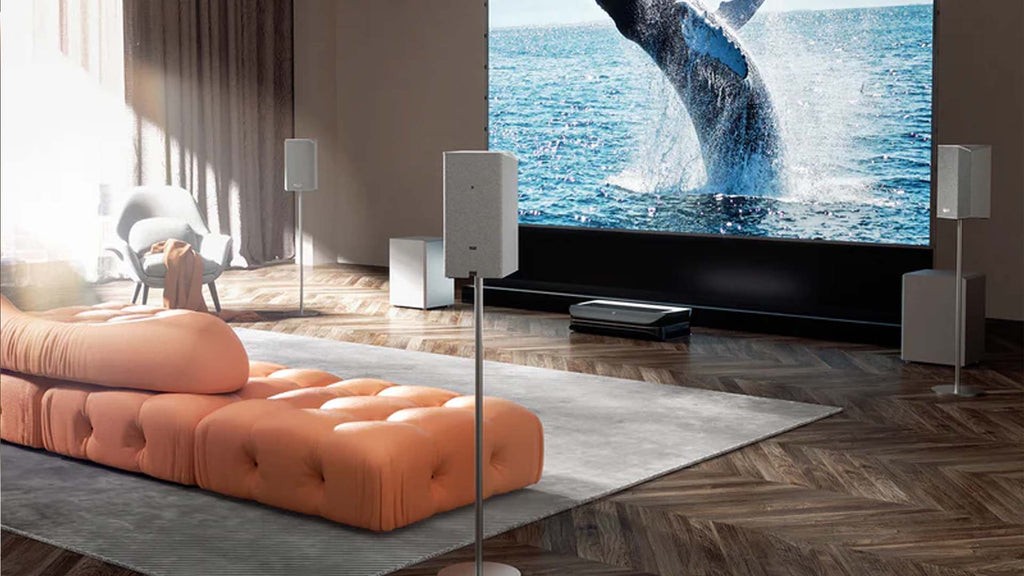
This is where projectors truly excel. While TVs reach their financial and practical limits at 85 inch, projectors are just getting started. Screen sizes of 120, 150, or even more inches can be achieved cost-effectively. This significant difference in size leads to a qualitative shift: the image fills your peripheral vision, creating a strong sense of immersion. You are no longer just watching a screen—you are immersed in the film. Even a large TV remains a window to the world, whereas a projector brings the world into your room.
Criterion 2: Brightness, Contrast, and Black Level
In this category, the television is the clear winner. As self-emitting displays (OLED) or with extremely powerful backlighting (QLED, Mini-LED), televisions produce significantly higher brightness. This makes them unbeatable in rooms with ambient light, where a projector’s image can quickly appear washed out and pale. OLED TVs in particular offer perfect black levels and infinite contrast thanks to their ability to completely turn off individual pixels. A projector cannot project true black; its "black" is simply the absence of light. In an optimized, dark room, the result is impressive, but it does not reach the perfection of an OLED TV. This also affects HDR performance, which is noticeably more dynamic and impressive on a bright television.
Criterion 3: Installation & Space Requirements
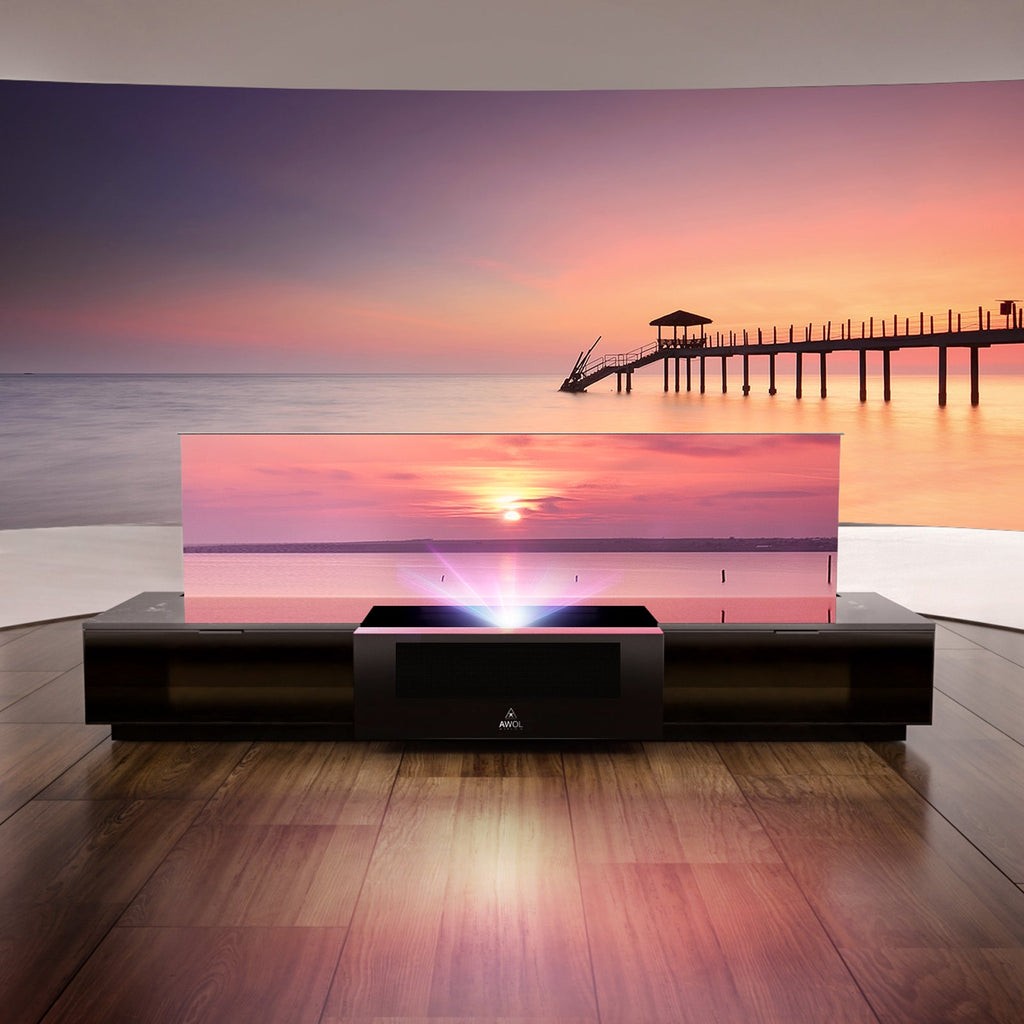
Installing a TV is a straightforward task: set it up, plug it in, and you're done. Wall mounting is also quickly completed. Installing a projector, on the other hand, is a small project that requires careful planning. You need to calculate the correct throw distance for your desired screen size, mount the projector on the ceiling or a rear wall, install and align a screen, and discreetly route long cables for power and signal. While a TV is a "plug-and-play" solution, a projector setup requires commitment and preparation.
Criterion 4: Keeping an Eye on Total Costs
You always need to consider the total cost of the system. The price-per-inch equation is crucial here:
- Up to 85 inch: TVs offer better value for money.
- Over 100 inch: The situation changes dramatically. A 100-inch TV can cost several times more than a high-quality projector that easily achieves 120 inch.
However, the projector itself is only one component. You also need to factor in the cost of a screen, a sound system, and a mount. Additionally, projectors with traditional UHP lamps have higher maintenance costs (lamp replacement every 2,000–5,000 hours). Models with long-lasting LED or laser light sources (20,000+ hours) are a much more economical choice.
Criterion 5: Audio to Match the Picture
Most TVs come with decent built-in speakers. In contrast, the speakers in traditional projectors are usually just a makeshift solution. For a true cinema experience, both systems require an external sound system—from a quality soundbar to a full surround setup—which is an essential investment. Modern laser TVs are an exception here, as they often feature integrated high-quality soundbars that can surpass the audio performance of many TVs.
Criterion 6: Visual Comfort – Which Is Easier on the Eyes?
This is a frequently overlooked but crucial advantage of projectors. A television emits light directly into your eyes. A projector casts light onto a screen, which then reflects it. This indirect light is softer, more natural, and has been shown to cause less eye strain, especially during long movie nights. Additionally, exposure to high-energy blue light—associated with digital fatigue—is significantly lower with a projector.
The Technological Revolution: Can a Laser TV Replace the Television?
The greatest innovation in recent years has completely redefined the classic projector-or-TV question: the ultra-short throw projector, also known as Laser TV.
What exactly is a laser TV (ultra-short throw projector)?
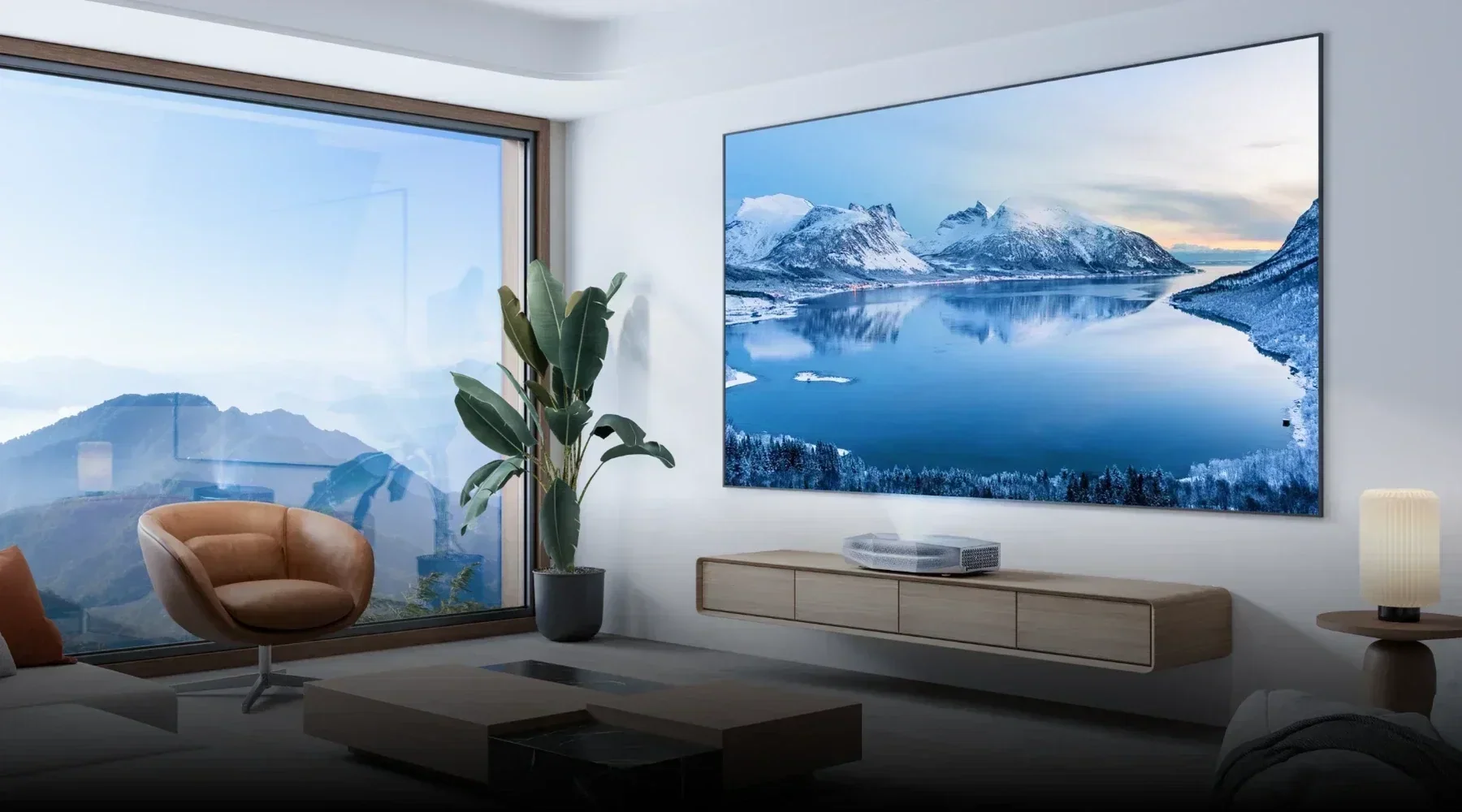
A laser TV is a projector that no longer needs to be installed on the ceiling or at the other end of the room. Instead, it is placed on a sideboard directly in front of the wall and projects a huge image (typically 100–120 inch) upwards from there. This eliminates complex installation and makes it a true plug-and-play alternative for the living room.
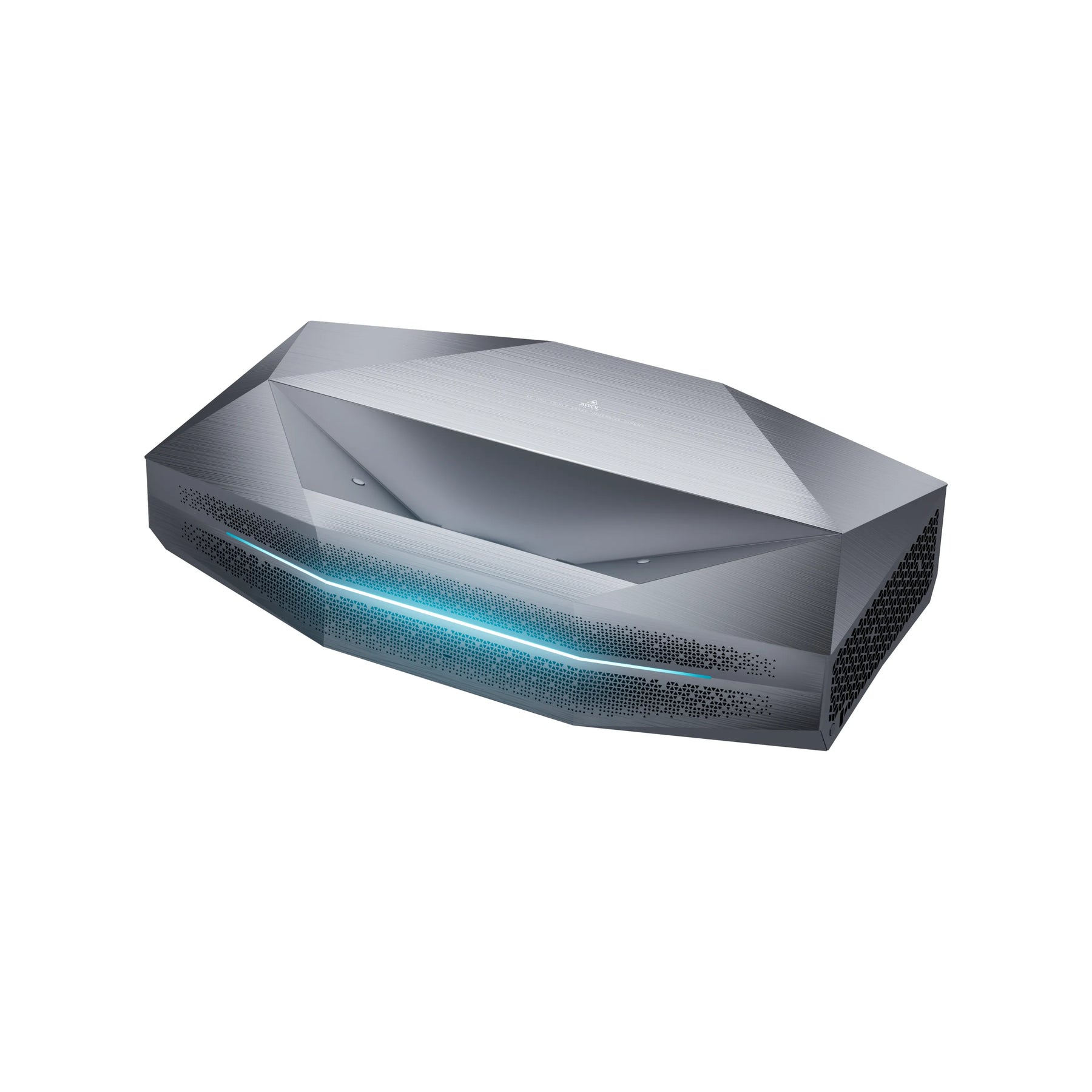
Aetherion Max 4K RGB ultra-short throw projector €3,699.00 €3,999.00 4K up to 200 inch 3300 ISO lumens 6000:1 contrast PixelLock™ Anti-RBE 2D/3D 110% Rec.2020 VRR + 1 msPre-order
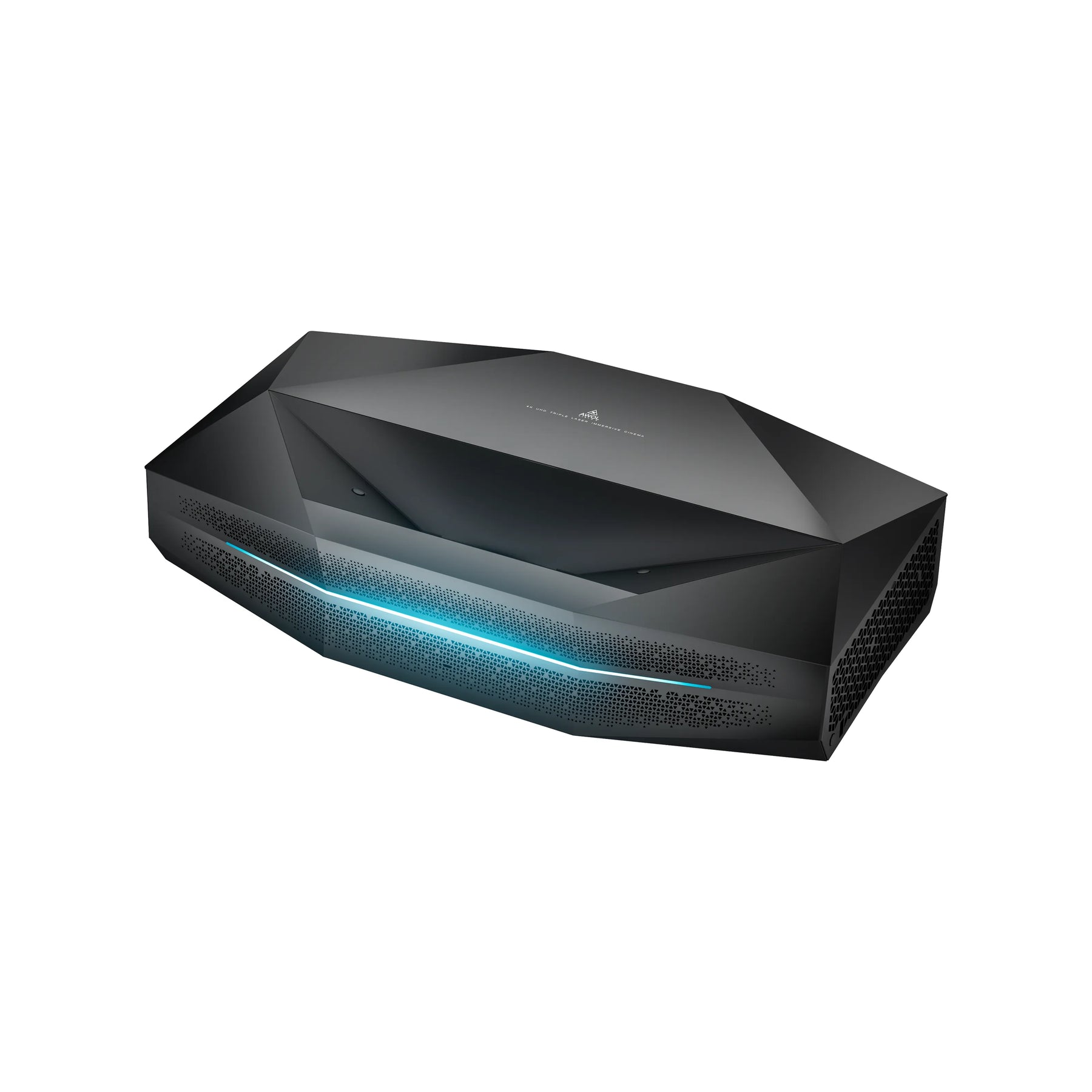
Aetherion Pro 4K RGB ultra-short throw projector €2,799.00 4K up to 200 inch 2600 ISO lumens 6000:1 contrast PixelLock™ Anti-RBE 2D/3D 110% Rec.2020 VRR + 1 msPre-order
The promise: Large screen without a dark home theater basement
The true strength of laser TVs is revealed when combined with a dedicatedALR screen (Ambient Light Rejecting). This high-tech surface precisely reflects the steep upward light from the projector toward the viewer, while absorbing distracting ambient light from the sides or ceiling. The result is an impressively bright, high-contrast image, even in a living room that is not completely darkened. This makes the projector a truly practical alternative to a conventional TV for everyday use.
The compromises: Where laser TVs still reach their limits
Despite this impressive technology, there are limitations. When the screen is exposed to direct sunlight, even a laser TV system will fall short compared to a bright television. Additionally, a high-quality combination of laser TV and ALR screen is a premium solution that is priced above many conventional televisions.
Decision support: Which type are you?
To help you make your final decision, we have outlined three typical user profiles. Find out which one suits you best.
The TV is your best choice if…
- ... you mainly watch TV during the day or in a bright living room.
- ... you are looking for a straightforward all-in-one solution with no installation required.
- ... you need a versatile device for news, series, and occasional movies.
- … you as a competitive online gamer rely on the absolute lowest latency and highest refresh rate.
The classic projector is ideal for you if…
- … you have a dedicated, darkenable room for your home theater.
- ... for you, the authentic cinema experience with maximum screen size is the top priority.
- … you are a cinephile willing to invest time and budget in a perfectly tuned complete system.
- … visual comfort during long movie nights is a high priority for you.
A laser TV is the right choice when…
- … you want to achieve a massive image of over 100 inches in your regular living room.
- … if you find the aesthetics of a TV as a "black hole" on the wall disturbing and prefer a minimalist solution.
- … if your budget allows for a premium investment to combine the advantages of both worlds—large screen size and suitability for living rooms.
Conclusion: There is no winner—only your personal, perfect solution
As our analysis shows, there is no universal answer to the question "Projector or TV?" It is a compromise between the objective image brilliance of the TV and the subjective, immersive impact of the projector.
Find your perfect solution by honestly assessing your own priorities. Finally, ask yourself these questions:
- What is my main purpose? The celebrated movie night or everyday TV viewing?
- What is my room like? A dark home theater or a bright living room?
- What is my budget and preferred screen size? Am I looking for the best performance under 85 inch, or the most cost-effective solution for over 100 inch?
- How important are aesthetics and visual comfort to me? Does a black screen on the wall bother me, and how sensitive are my eyes during long sessions?
Your answers will inevitably guide you to the right technology for your home.
Discover More Insights