Projectors in the Living Room: The Guide to Perfect Images in Daylight
December 20, 2025
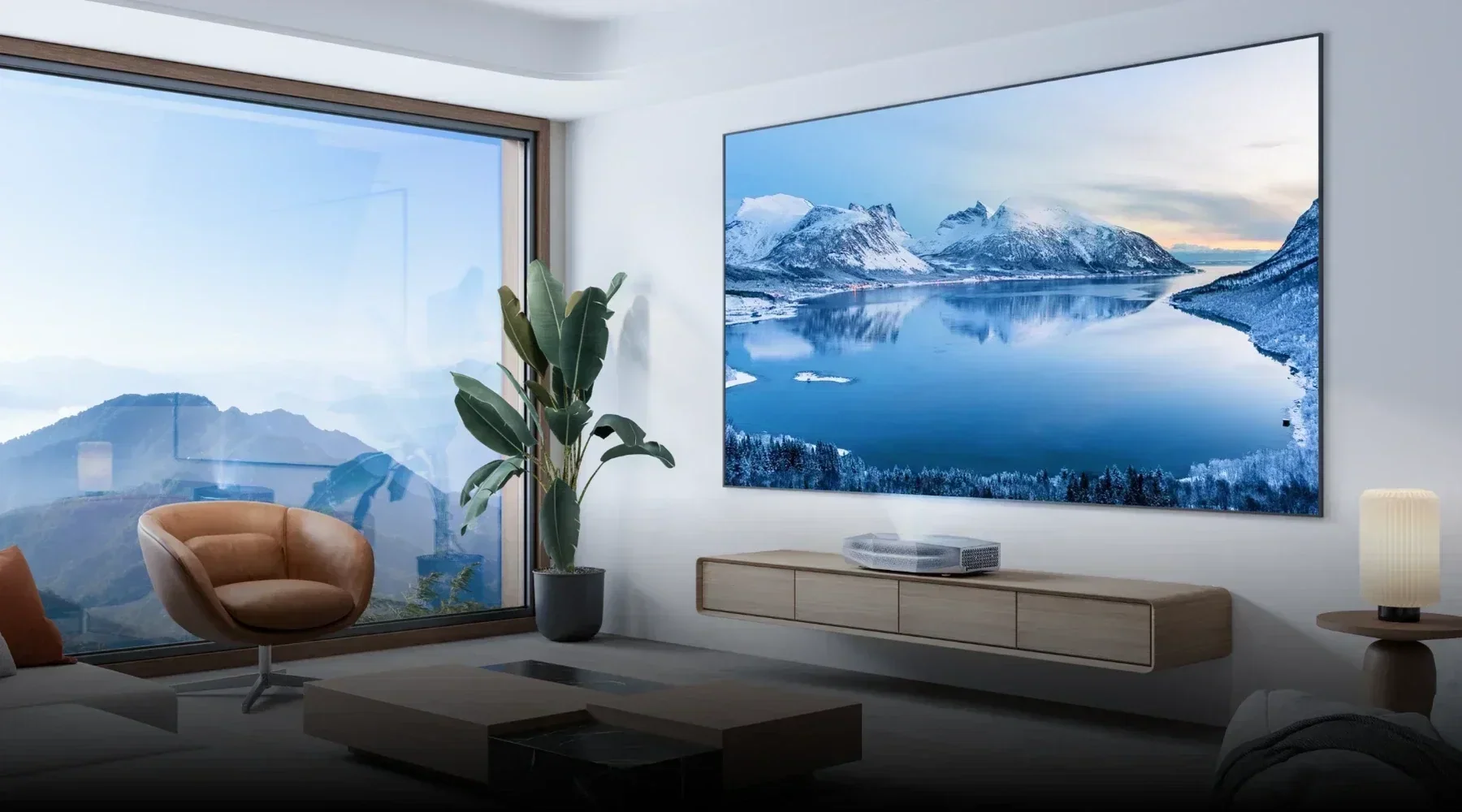
Many home theater enthusiasts face the same dilemma: they want a screen larger than 100 inch, but do not wish to turn their living room into a dark cave. While traditional projectors excel in darkened basement rooms, they often appear washed out and lacking in contrast in bright living spaces.
The questionProjector or TVis therefore no longer just a matter of personal preference, but a technical decision. Anyone looking to permanently replace their television needs to understand the physical challenges and focus on two key components: high brightness according to ISO standards and specialized light filtering.
This article explains which technical specifications are essential for a daylight setup.
Physics of Light: Why Standard Projectors Fail During the Day
The fundamental issue when using it in the living room is not the brightness of the image itself, but the reproduction of black. Those who understand,how a projector works, white: A projector cannot project "black"; it only projects light onto a passive surface.
Dark areas in the image are created solely by the absence of light. However, in a sunlit room, the screen is already brightened by ambient light. An unlit pixel is therefore not black, but white or light gray. The result is a drastic loss of contrast—the image appears washed out.
To counteract this effect, it is not enough to simply buy a "brighter" projector. The system must actively manage ambient light.
The Screen Technology: ALR and CLR Explained
The most important component for a home theater is the projection surface. A standard screen (matte white, gain 1.0) diffusely reflects light in all directions. This also means that disruptive sunlight or lamp light is reflected directly back to the viewer.
For bright rooms, high-contrast screens (ALR –Ambient Light Rejecting) essential. For those who want to explore the topic in more depth, ourScreen & Projector Buying Guidedetailed information. ForUltra-short throw projectors (laser TVs)comes the specificCLR technology (Ceiling Light Rejecting) is used.
The functionality is based on a microscopic louver structure:
- Light intake:The light from the projector, which comes steeply from below, is directed precisely toward the viewer's eye.
- Light blocking:Distracting light coming from above (ceiling lights) or from the side (windows) is absorbed by the structure.
Before choosing a model, you should make sure to select the appropriateCalculate screen size, to ensure it fits perfectly in your space.
Understanding Brightness: ISO Lumens as a Standard
If you want to use a projector as your main device in the living room, you need to be able to read technical specifications. Marketing terms like "LED lumens" are often misleading. For an objective assessment, the industry standardISO lumens(according to ISO 21118) is crucial.
- Darkened rooms:Here, 1,500 to 2,000 lumens are often sufficient.
- Living room (daylight):Here are values from3,000 ISO lumensnecessary to counteract ambient light.
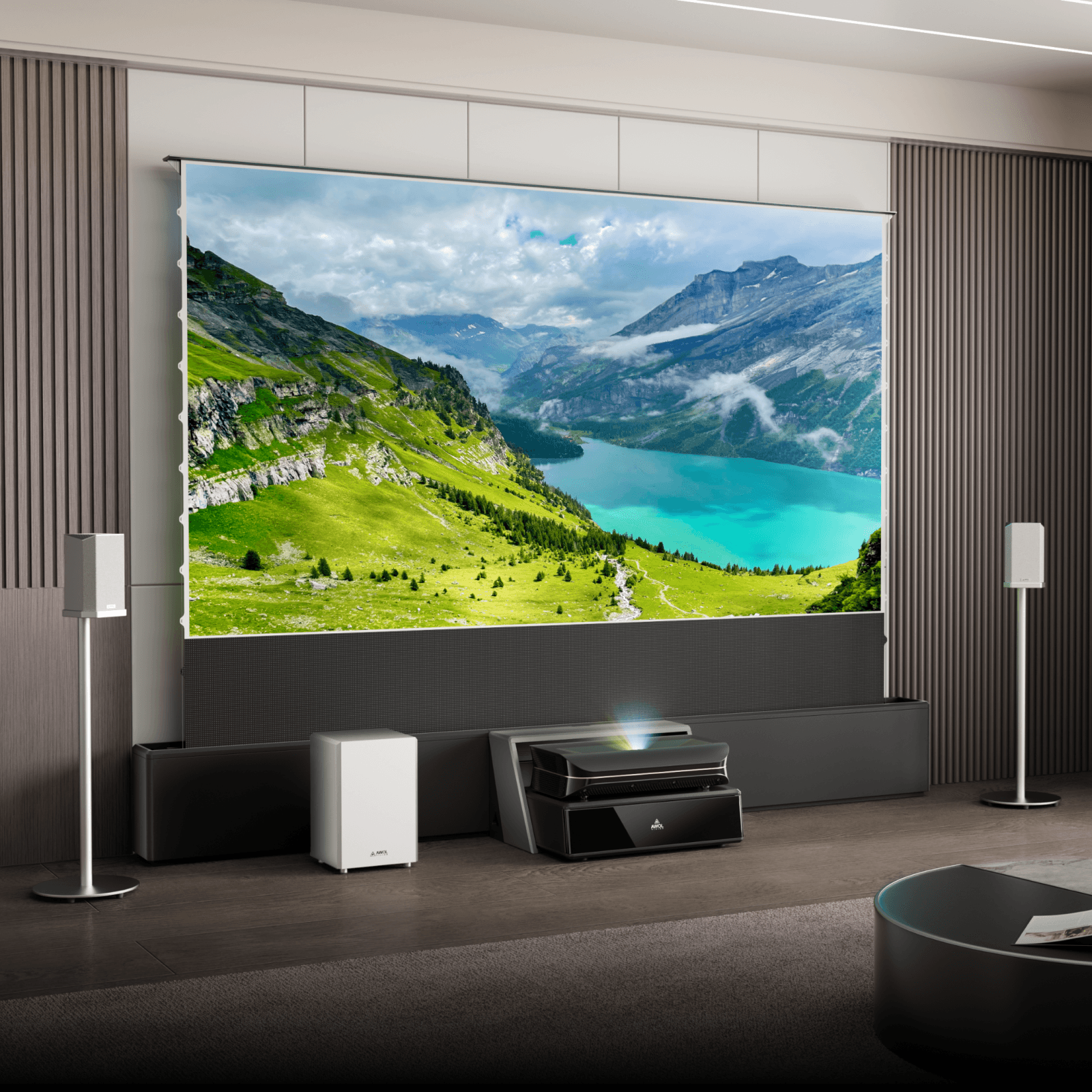
A reference device in this class is theAWOL Vision LTV-3500 Pro. It delivers3,000 ISO lumensand uses a tri-chroma laser light source. This high brightness ensures that the projected image remains vibrant even in ambient light.
In addition, the LTV-3500 Pro supports modern standards such asDolby Vision. To understand why this dynamic range is especially important in a bright living room, read our article:What is Dolby Vision and why is it so important?. Also the difference betweenSDR vs. HDR in Home Theaterplays a major role in color perception.
Ultra-short throw (UST): The space-saving TV alternative
Conventional long-throw projectors require ceiling mounting. However, for the living room, theUltra-short throw projector(UST) enforced. Learn more in ourUltra-Short Throw Projector Guide.
These devices are placed directly on the sideboard, just a few centimeters from the wall.
- No shadow casting:Since the light beam comes from below, no one walks through the image.
- Flexibility:With accessories such as theSlider trayallows the projector distance to be perfectly adjusted even on narrow sideboards.
- Aesthetics:In combination with integrated solutions such as theAWOL Vision Vanish Laser TVor theAWOL Vision Stationthe technology disappears completely into the furniture when not in use.
FAQ: Frequently Asked Questions About Home Projectors
What is the difference between lumens, ANSI lumens, and ISO lumens?
- Lumen:A general term, often used as an imprecise marketing value.
- ANSI lumens:An older US standard for measuring brightness.
- ISO lumens:The internationally recognized standard according to ISO 21118. It is more strictly defined than ANSI and is considered a reliable reference worldwide. A value in ISO lumens guarantees a tested light output.
Is 4K really worth it?
Absolutely. Especially with screen sizes over 100 inch, the difference between Full HD and 4K becomes clearly visible. Read more about thisWhat is 4K resolution?and our analysisIs a 4K projector worth it?.
How do I connect my devices?
Modern laser TVs function like televisions. You can easily connect laptops or smartphones. Here you will find guides forConnect projector to laptoporConnect projector to smartphone. For the best sound, connect viaHDMI eARC.
Is a plain white wall sufficient for a laser TV?
No. A white wall reflects light uncontrollably. In daylight, you lose about 80% of the possible contrast. A CLR screen is absolutely necessary for daytime use.
Discover More Insights