Quiet projectors: How many dB is truly "whisper-quiet"?
March 21, 2026
There is hardly anything more frustrating for a home theater enthusiast: a highly suspenseful, quiet film dialogue is unfolding on the screen—and right above your head, the projector fan is buzzing like a small hairdryer.
The search for a truly quiet projector is often complicated by misleading data sheets and unclear decibel values. Before choosing a model, it is important to understand the exact technical background. This guide explains in simple terms when a projector can actually be considered "quiet," what to look for in manufacturer specifications, and how the placement in the room can drastically affect your listening experience.
Why are projectors so loud?
When looking at the details,how a projector worksThe simple physical rule is: where there is a lot of light, there is also a lot of heat. Whether it’s a traditional lamp, LED, or the latest laser technology—projecting a bright image onto a 120-inch screen requires a tremendous amount of energy from the light sources.
To prevent overheating of sensitive internal components (such as color chips or lenses), fans must continuously expel hot air from the housing. A particularly tricky issue: compact mini projectors are often significantly louder than large home theater models. Since only small fans fit into small housings, they have to spin at much higher speeds to move the same amount of air. The result is a high-frequency, distracting whirring noise.
From how many decibels (dB) is a projector considered quiet?
The volume of projectors is measured in decibels (dB). Since the dB scale is logarithmic, an increase of just 10 dB is perceived by the human ear as roughly doubling the loudness.
The magic threshold: Under 30 dB
For an uninterrupted home theater experience, you should follow these recommended guidelines:
- Over 35 dB:Clearly audible and often perceived as distracting during quiet movie scenes (comparable to a quiet refrigerator).
- 30 to 35 dB:Acceptable for a typicalLiving room setupwith ambient noise, but still noticeable during quiet passages.
- Under 30 dB:Considered a standard in home cinemaquiet.
- Under 25 dB:Considered a true premium segment and is virtually whisper-quiet.
Beware of the “Eco Mode” trick
A common mistake when purchasing is blindly trusting the spec sheet. Many manufacturers prominently advertise their projectors with figures like "only 24 dB." However, the fine print often reveals that this value only applies in the so-calledEco modeis achieved.
In eco mode, the projector's brightness is often reduced by 30% to 50%, which eases the load on the fan. However, as soon as you watch a modern blockbuster in fullHDR (High Dynamic Range)When playing at maximum brightness, the projector switches to normal mode and the fan noise quickly rises above 30 dB. Always pay attention to the noise level specified for maximum performance.
What to consider when buying a quiet projector
If you are looking for a whisper-quiet system that makes no compromises on image quality, light technology and setup are the key factors in ourProjector Buying Guide.
Laser vs. Lamp: Which offers better cooling?
Conventional UHP lamps generate immense heat and require aggressive cooling. In contrast, modern RGB laser technology operates much more efficiently. A pure RGB laser system converts energy into light far more effectively, producing less excess heat. This means you can enjoy an extremely bright and vivid image without the fans having to run at full speed.
The Position: Ceiling Mount vs. Ultra-Short Throw (UST)
The most effective way to eliminate fan noise is physical distance. A traditional ceiling-mounted projector is usually installed directly above or behind the couch—typically just one to two meters from your ears.
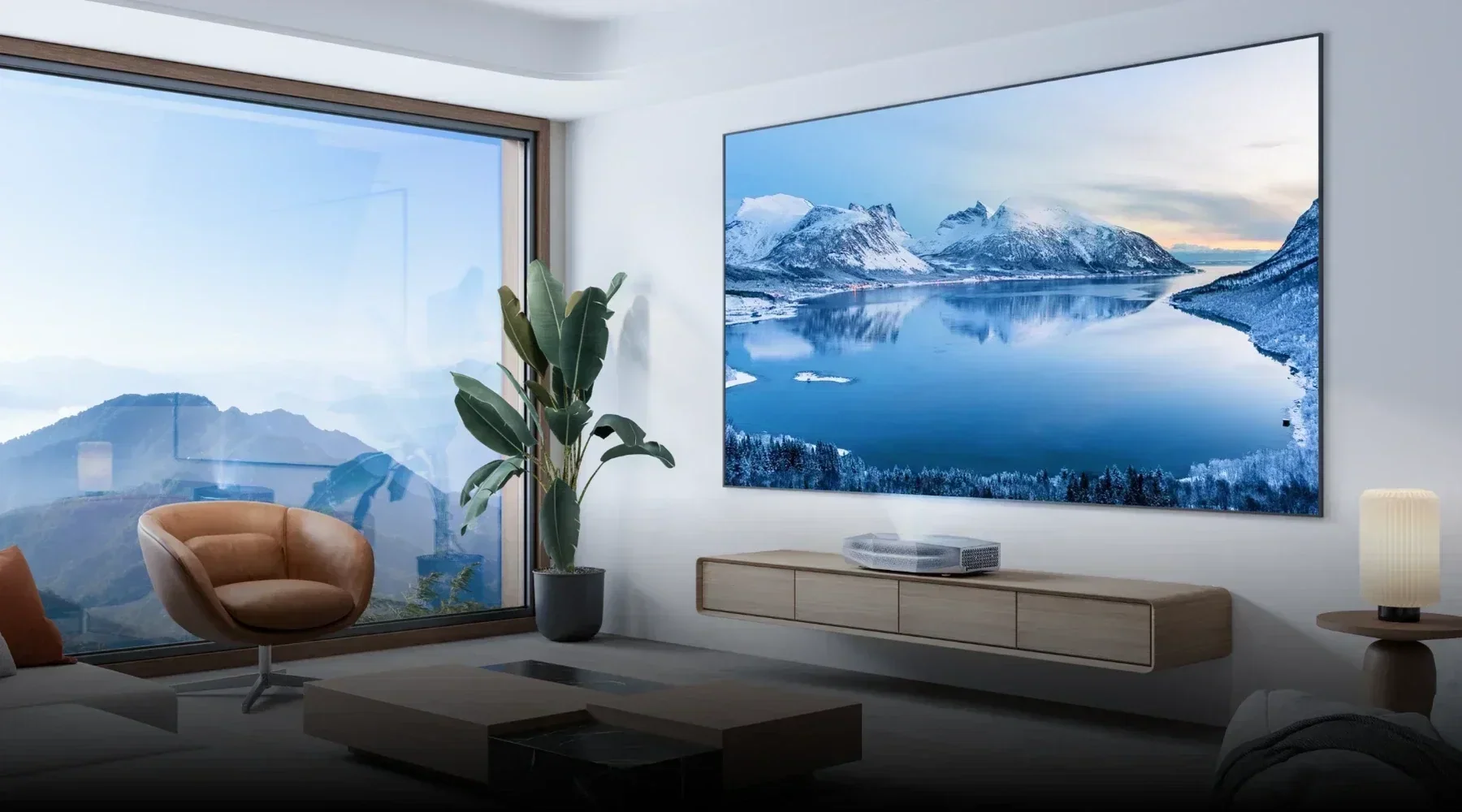
Here, aUltra-short throw projector (UST)makes the most of its greatest acoustic advantage. Modern devices such as the newAWOL Vision Aetherion Series(e.g. the Aetherion Max) use an extreme throw ratio of 0.2:1. This means the device is placed directly in front of the wall, right below the screen. Even when the Aetherion Max is running at full power with its extremely bright 3300 ISO lumens and pure RGB triple laser, the noise source is three to four meters away from your seating position. Combined with your front center speaker, the already quiet operating noise becomes virtually inaudible to viewers on the sofa.
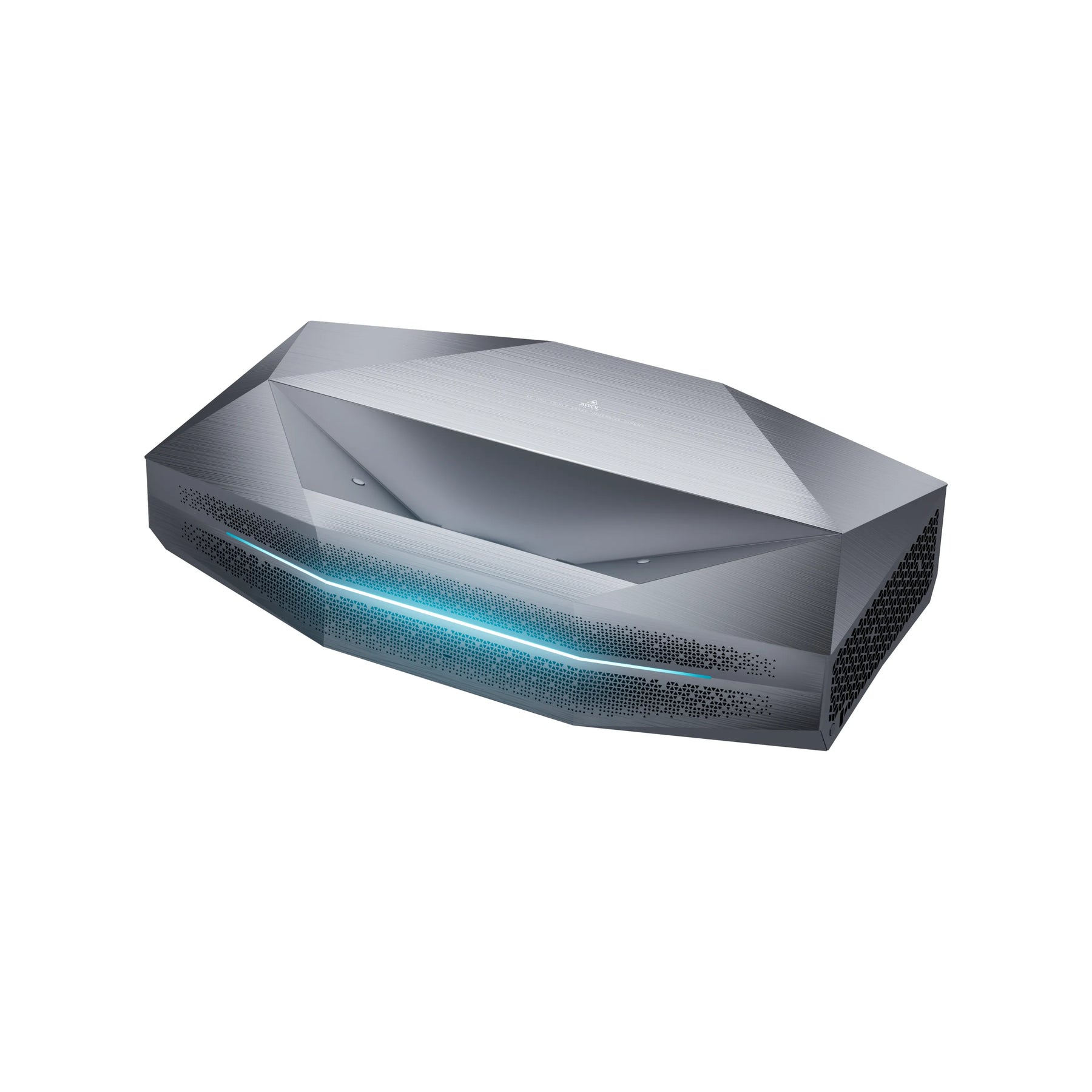
Aetherion Max 4K RGB ultra-short throw projector €3,699.00 €3,999.00 4K up to 200 inch 3300 ISO lumens 6000:1 contrast PixelLock™ Anti-RBE 2D/3D 110% Rec.2020 VRR + 1 msPre-order
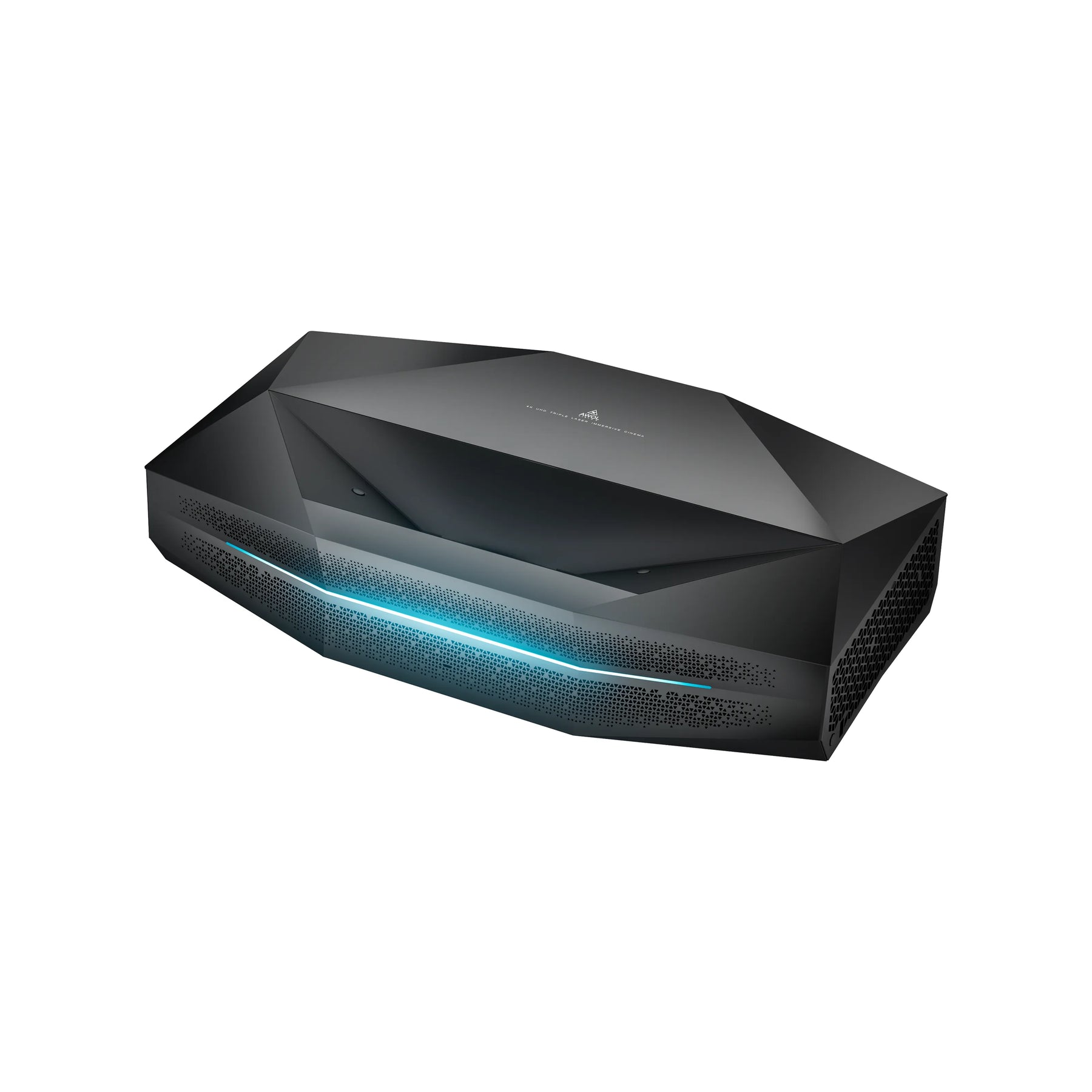
Aetherion Pro 4K RGB ultra-short throw projector €2,799.00 4K up to 200 inch 2600 ISO lumens 6000:1 contrast PixelLock™ Anti-RBE 2D/3D 110% Rec.2020 VRR + 1 msPre-order
Frequently Asked Questions (FAQ)
How can I reduce the fan noise of my projector?
Make sure the projector has enough space for ventilation (at least 20 to 30 cm on the sides). Clean the dust filters regularly, as a clogged filter forces the fan to run faster. If your room is completely darkened, you can also activate Eco mode to trade brightness for quieter operation.
Are 4K projectors louder than Full HD projectors?
Tendentially yes. The processing of the native4K UHD resolution, dynamic HDR metadata (such as Dolby Vision), and high refresh rates (e.g., 1 ms input lag for gaming) require more powerful processors and chipsets (such as the new DLPC8445 from Texas Instruments). This significant computing power generates more heat, necessitating a more efficient—and sometimes louder—cooling system compared to a simple Full HD device.
Are there completely silent projectors without fans?
For a true home theater experience with screen sizes from 100 to 150 inch: No. Completely fanless (passively cooled) projectors only exist in the category of so-called "pico projectors." However, these miniature devices are extremely low in brightness (often below 200 lumens) and are not suitable for use in a living room theater during daylight or for HDR content.
Discover More Insights