How many lumens should a projector have? The comprehensive brightness guide
February 12, 2026
Anyone searching for a projector today is bombarded with numbers. From budget models claiming “9,000 lumens” to high-end devices with “2,500 lumens,” the specifications often seem contradictory. The most common question buyers ask is: How many lumens do I really need for my living room?
The answer depends on two factors: your ambient lighting and the measurement standard. This article explains why the modern ISO lumen standard is your most important reference and which values are necessary for home theater, living rooms, or daylight conditions.
The first step: Understand the unit of measurement (ISO vs. ANSI)
Before we provide specific figures, we need to address a common misconception. Brightness is often measured in different ways. To make a reliable purchasing decision, you should primarily refer to the ISO standard.
Why ISO lumens (ISO 21118) are the more reliable standard
For a long time, \ANSI lumensthe standard. While it is widely used, it is often inaccurate. Manufacturers could use specially optimized prototypes to boost the values.
The international standardISO 21118is significantly stricter. It ensures that the device you actually unpack delivers the promised performance—not just a laboratory model.
- The rule of thumb: Since ISO uses stricter measurements, the numbers are often lower than with ANSI.
- Conversion: One ISO value often corresponds to an ANSI value minus approximately 10–20%.
(Example: A projector with a true 3,000 ISO lumens is often actually brighter than a device advertised with 3,500 ANSI lumens.)
Concrete recommendation: How many ISO lumens are suitable for each room?
Here are the reference values you need for a brilliant image – based on accurate ISO specifications.
1. The classic home theater (completely darkened)
In a room without windows or with blackout curtains ("batcave"), brightness is not the most important criterion.
- Recommendation: 1,500–2,000 ISO lumens
- Why not more? In complete darkness, too much light can cause eye fatigue and negatively affect black levels (contrast). Here, quality takes precedence over quantity.
2. The living room (evening with ambient light)
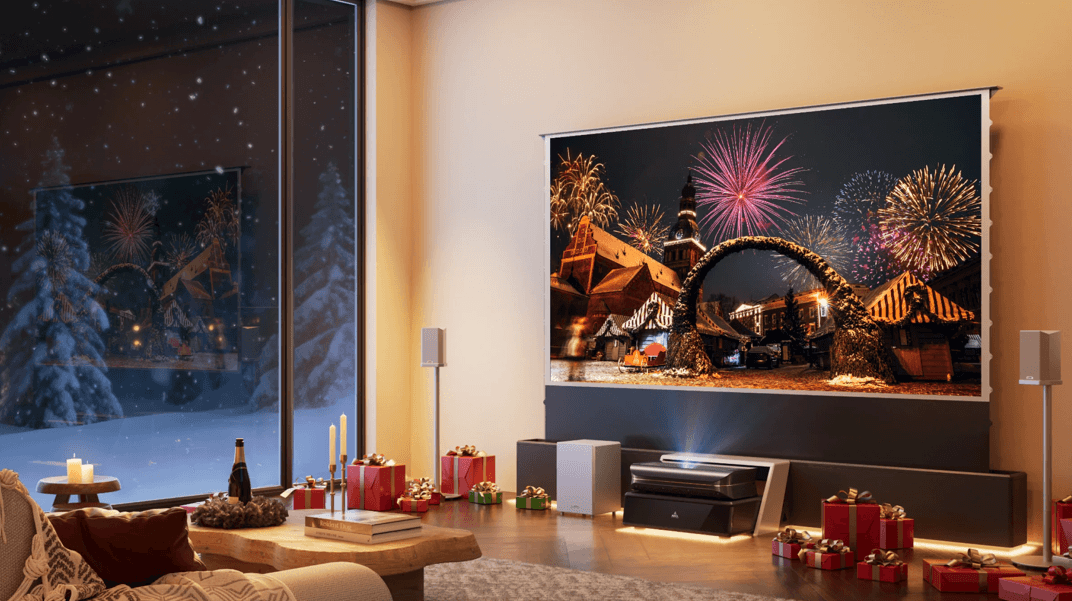
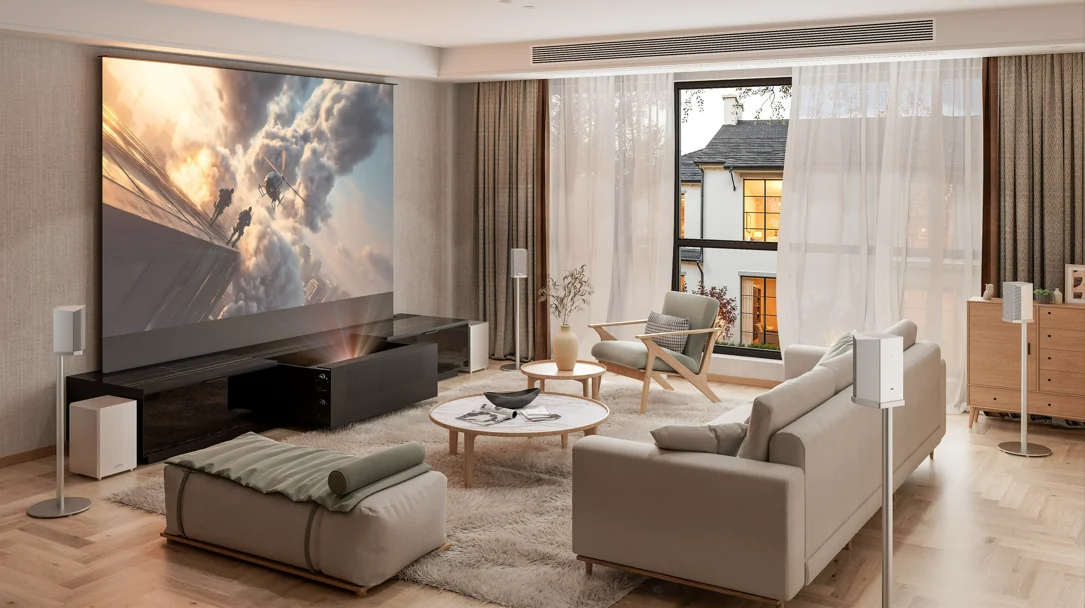
This is the most common scenario: you watch movies while a floor lamp is on in the background or some ambient light enters through the blinds. In this case, a dedicated home theater projector is often not sufficient.
- Recommendation: 2,000 – 2,800 ISO lumens
- The goal: The projector needs enough “punch” to stand out against artificial ambient light.
- Tip: If you're unsure how to best set up your living room, read our tips on the topicProjector in the living room.
3. Bright Rooms & Daylight Replacement (Laser TV)
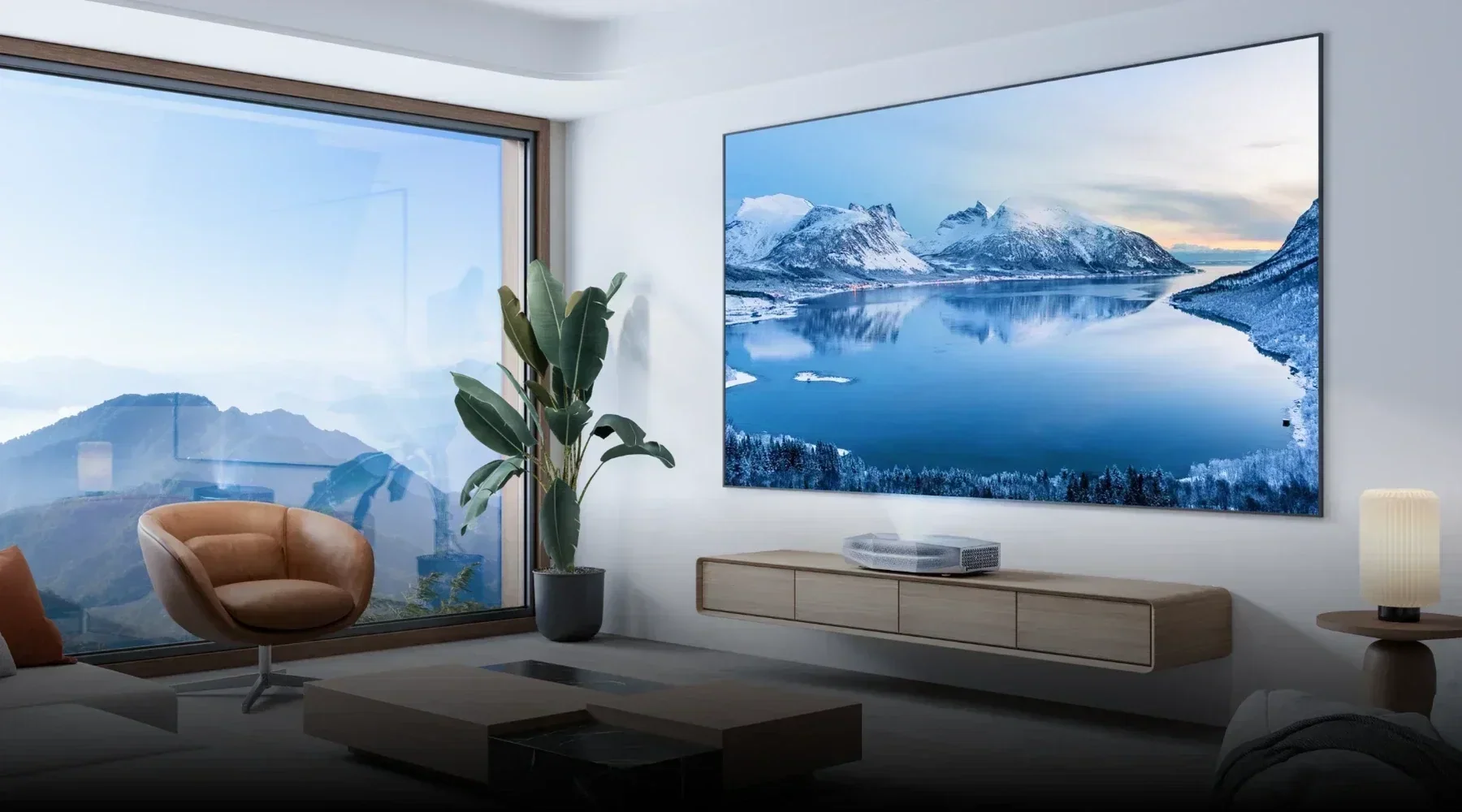
You want to watch sports during the day or use the projector as a fully functionalTV replacementuse without completely darkening the room?
- Recommendation: At least 3,000+ ISO lumens
- The challenge: Conventional projector technology struggles against daylight. Here, you need top-tier performance, as provided by modern ultra-short throw projectors.
- Important note: Brightness alone is not sufficient here. Since the light is distributed over a large area (see also:Calculate screen size), you will definitely need a high-contrast screen (CLR). This filters out ceiling light, as the image may otherwise appear washed out despite high lumens. Learn more in ourScreen Buying Guide.
The 'brightness dilemma' and the solution (contrast vs. lumens)
Many buyers make a crucial mistake: they choose solely based on the highest lumen count. The problem with this approach is physics.
Traditionally, projectors were known for: the brighter the image, the lower the contrast.
An extremely bright projector (3,000+ lumens) often brightens the dark areas of the image as well. Space in a sci-fi movie then appears not black, but dark gray. While the image is bright, it can look "flat." This is a disadvantage, especially with modern formats (comparison:SDR vs. HDR in Home Theater).
The new generation: High ISO lumens without loss of contrast
Modern RGB laser technology breaks this old rule. A current reference example is the new AWOL Vision Aetherion.
This model delivers 3,300 ISO lumens, which is extremely bright and ensures a clear image even in well-lit living rooms. What sets it apart, however, is that this brightness does not come at the expense of black levels. With a native contrast ratio of 6,000:1 (three times higher than many standard cinema projectors), it demonstrates what is technically possible today:
- Sufficient brightness for daytime use (3,300 ISO lumens).
- Cinema-like black levels for evening viewing (6,000:1 contrast ratio).
So if you are looking for a projector for both scenarios (day and night), you should not only consider the lumens, but also check whether the contrast ratio can keep up with the brightness.
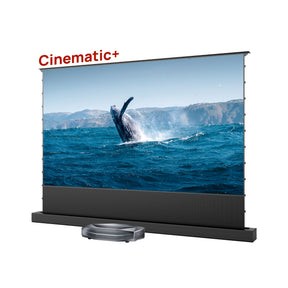
Aetherion Max + 100''–120'' Motorized Floor Screen Bundle • Aetherion Max: 4K RGB UST, 3300 ISO lumens, PixelLock™ and Anti-RBE • Motorized floor screen: flexible 100''–120'' projection without fixed wall installation • Bright, living room-friendly bundle for cinema, sports, and gaming with VRR + 1 msPre-order
Summary: Checklist for Your Purchase
Use this table to avoid incorrect purchases. Refer to the strict ISO values to ensure reliability.
| Raumsituation | Benötigte Helligkeit (ISO 21118) | Kritischer Zusatzfaktor |
|---|---|---|
| Dunkler Kinoraum | 1.500 – 2.000 ISO-Lumen | Fokus auf Schwarzwert & Farbtreue |
| Wohnzimmer (Abends) | 2.000 – 2.800 ISO-Lumen | Ausgewogenheit zwischen Hell & Dunkel |
| Helles Wohnzimmer (Tag) | 3.000+ ISO-Lumen | Hoher nativer Kontrast (z. B. 6000:1) + CLR-Leinwand |
Conclusion
Don't be misled by inflated marketing numbers on cheap devices. Ask for the ISO value. For a true all-round experience in your living room, a value above 3,000 ISO lumens is ideal—but only if the contrast is also right.
Discover More Insights